How to Sleep Better by Changing One Evening Habit
30 August 2026
You have probably read a dozen articles about sleep hygiene. You know about the cool room, the dark curtains, the no-screens-before-bed rule. You have tried melatonin, magnesium, and white noise apps. Yet here you are, staring at the ceiling at 2:47 AM, wondering what is actually wrong with you.
The problem is not your mattress. It is not your caffeine intake, your stress level, or your genetics. The problem is that you are treating sleep as a passive event that happens to you, rather than an active transition that you must initiate. And the single most effective way to initiate that transition is to change one specific evening habit: the way you end your day, not the way you begin your night.
This article is not about adding another supplement to your routine. It is about subtracting something that is silently sabotaging your sleep, and replacing it with a deliberate, evidence-informed practice that your brain actually understands.
The Habit That Matters Most: The "Last Task" Problem
Think about your typical evening. You finish dinner, maybe watch a show, scroll through your phone, brush your teeth, and then get into bed. The last thing you do before your head hits the pillow is probably one of these: check social media, answer a work email, watch a short video, or think about tomorrow's to-do list.That is the habit to change.
Your brain does not have an off switch. It has a transition system, but that system requires a clear signal. When your last waking activity is high-arousal, high-information, or high-emotion, your brain receives the signal that the day is still happening. It keeps producing cortisol, keeps your heart rate slightly elevated, and keeps your default mode network active. You fall asleep eventually, but you do not fall into deep, restorative sleep.
The change is simple: make your last task before bed a low-arousal, low-information, low-emotion activity that you perform consistently, at the same time, in the same order, every single night.
This is not about a "bedtime routine" in the fluffy sense. It is about creating a behavioral anchor that tells your nervous system, "The day is over. It is safe to power down."
Why This Works: The Neuroscience of Sleep Onset
Sleep onset is not a light switch. It is a gradual process involving the interaction of your circadian rhythm, your sleep drive (adenosine accumulation), and your autonomic nervous system. For you to fall asleep quickly and stay asleep, your parasympathetic nervous system must dominate. That is the "rest and digest" branch, the one that lowers your heart rate, reduces blood pressure, and shifts your brain waves from beta (alert) to alpha (relaxed) and then to theta (drowsy).High-arousal activities before bed, even seemingly harmless ones, keep your sympathetic nervous system engaged. This is your "fight or flight" branch. It does not matter if you are not physically running from a bear. Your brain does not distinguish between a work email and a predator when it comes to threat detection. Both activate the same stress response.
When you change your last task to something monotonous and calming, you give your parasympathetic system a chance to take over. This is why reading a physical book works better than reading on a tablet. It is not just about blue light. It is about the cognitive load. A book requires linear, passive attention. A tablet invites multitasking, notifications, and hyperlinks. One is a lullaby. The other is a cocktail party.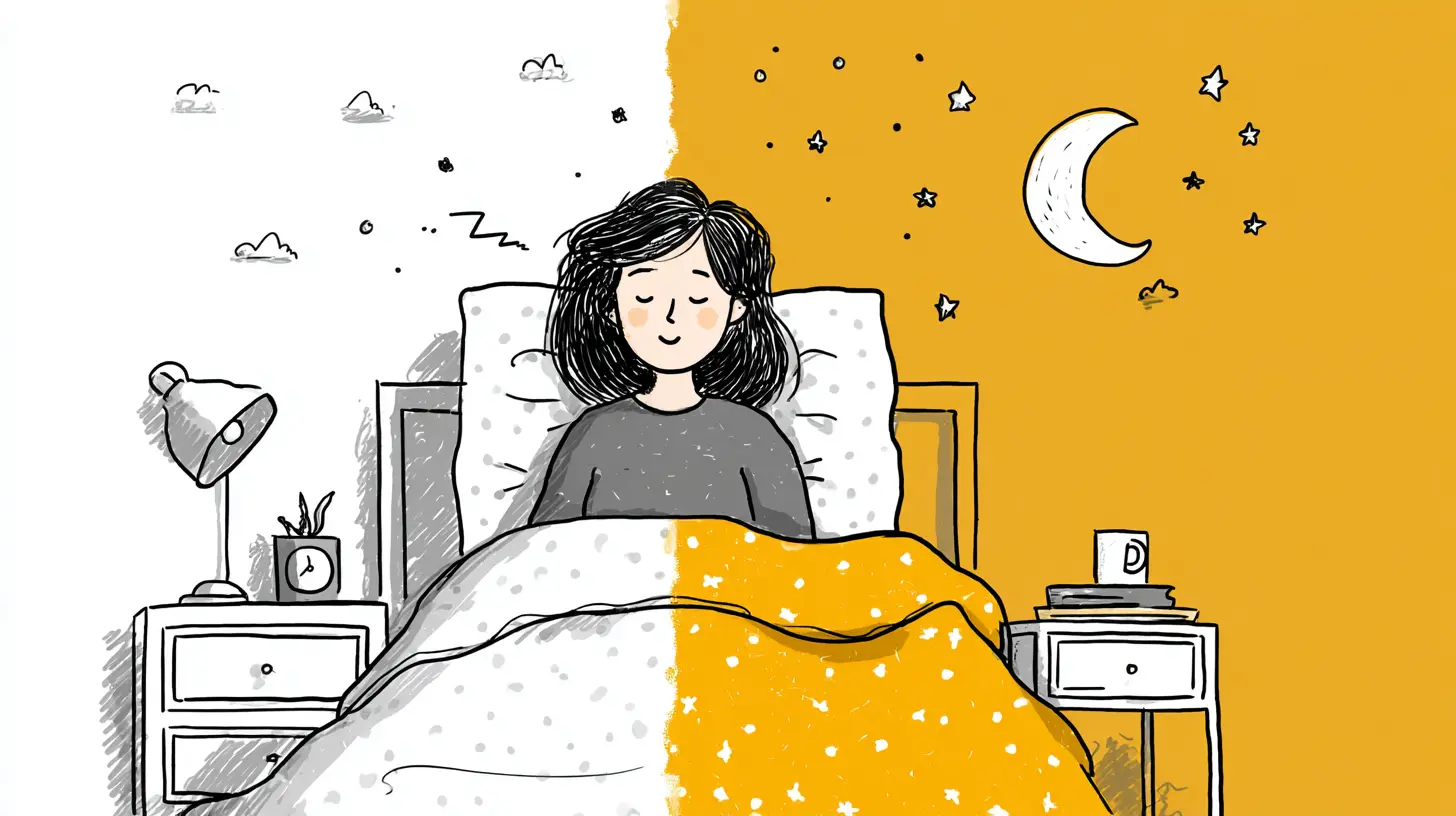
The Specific Habit: The "Brain Dump" and Its Variations
The most effective single evening habit, based on both clinical experience and behavioral psychology, is a structured "brain dump" performed on paper, not on a screen. This involves writing down everything that is occupying your mental space, but with a specific twist: you do not just list tasks. You categorize them into three groups: unresolved tasks, worries, and tomorrow's priorities.Here is why this works. Your brain has a built-in mechanism called the "Zeigarnik effect." It keeps unfinished tasks active in working memory so you do not forget them. This is great for survival, terrible for sleep. When you write down an unfinished task, you offload it from your working memory to an external medium. Your brain can finally let go because it knows the information is safe.
But there is a catch. A simple to-do list is not enough. If you write down "call the dentist" and "finish the report," your brain will still worry about the report because it is complex and emotionally loaded. You need to add a second step: a "next action" for each item. For example, "finish the report" becomes "open the document and write the introduction." This reduces the cognitive load because your brain now has a concrete, manageable first step, not a vague, overwhelming project.
The worry category is equally important. Write down what is bothering you, then write down one sentence about why it might not be as bad as you think. This is not toxic positivity. It is cognitive reappraisal. You are not denying the problem. You are giving your brain a different frame, which lowers the emotional intensity.
Finally, write down your top three priorities for tomorrow. This does two things. It gives you a sense of closure for today, and it prevents your brain from starting tomorrow's planning session at 3 AM. When you wake up at night, your brain often tries to solve problems. If you have already told it what to do tomorrow, it has no reason to wake you up for a planning session.
The Paper vs. Screen Debate: Why Analog Wins
You might be tempted to do this brain dump on your phone or laptop. Do not. Here is the nuanced reason why.First, the physical act of writing on paper engages more sensory and motor pathways than typing. This increases the encoding of the information, which means your brain trusts that it is recorded. Typing feels more like a temporary buffer. Writing feels like a permanent commitment.
Second, screens emit light that suppresses melatonin, but that is only part of the story. The bigger issue is the context. A phone or laptop is associated with work, social comparison, and endless information. Even if you are just using a notes app, the device itself is a cue for alertness. Your brain has learned that when you hold this object, you are in "processing" mode, not "resting" mode.
Third, the act of writing by hand is slower. That slowness is a feature, not a bug. It forces you to think more deliberately about each item. It gives your brain time to settle. Typing is too fast, too close to the speed of thought. Writing is closer to the speed of breathing.
That said, there is a legitimate trade-off. If you have arthritis, carpal tunnel, or a condition that makes handwriting painful, a tablet with a stylus can work. The key is that you are using a stylus to write, not a keyboard to type. The physical drag of the pen on the screen still provides some of the motor feedback. But if you can write on paper, do that.
The Timing: When to Do It
The brain dump should be your last task before you turn off the lights. Not thirty minutes before. Not after you brush your teeth but before you read. It should be the final thing you do, with the lights dimmed, and then you immediately get into bed.Why the timing matters is subtle. If you do the brain dump and then watch a video, you have undone the benefit. The video re-engages your attention and spikes your arousal. The brain dump is not a warm-up. It is the closing ceremony.
Aim to do it at the same time every night, even on weekends. Consistency is what trains your circadian rhythm. Your body does not care about your schedule. It cares about regularity. If you do the brain dump at 10:30 PM on weekdays and 1:00 AM on weekends, your brain never learns the pattern. It is like trying to teach a dog a trick with random rewards. It will not stick.
If you are a shift worker or have an irregular schedule, do the brain dump exactly thirty minutes before your intended sleep time, regardless of what the clock says. The anchor is the sleep time, not the wall clock.
Common Mistakes and Misconceptions
There are several ways to do this habit wrong, and most people who try it fail for these reasons.Mistake one: writing too much. The brain dump is not a journal. It is a release valve. If you write three pages of emotional processing, you are actually re-activating the emotions you are trying to calm. Keep it to one page maximum. If you have more than that, you are not dumping, you are ruminating with a pen.
Mistake two: doing it in bed. Your bed must remain a sacred space for sleep and intimacy only. If you write in bed, your brain starts associating the bed with alertness and problem-solving. Do the brain dump at a desk, a table, or even on the floor. Then move to bed. The physical transition from desk to bed is part of the signal.
Mistake three: expecting immediate results. This habit is not a sleeping pill. It takes about two to three weeks for your brain to fully associate the behavior with the sleep onset. You might see improvement in the first few nights, but the real change comes from repetition. If you do it for three nights and give up, you have learned nothing.
Mistake four: using a digital device "just for the timer" or "just for the white noise." This is a slippery slope. The presence of a screen in the bedroom is enough to keep your brain in a state of low-level vigilance. Even if you do not touch it, the phone on your nightstand is a cue. Put it in another room, or at least in a drawer, and use a physical alarm clock.
Mistake five: thinking that this habit replaces other sleep hygiene practices. It does not. It is the keystone habit, but it works best in conjunction with a cool room (around 65 degrees Fahrenheit), a dark room, and consistent wake time. If you are drinking coffee at 6 PM or exercising at 10 PM, no brain dump will save you.
Real-World Examples and Comparisons
Consider two professionals with identical schedules and stress levels.Person A ends their day by checking work emails one last time, then scrolling through social media in bed. They fall asleep after about 20 minutes, but they wake up at 3 AM with a racing heart, thinking about a deadline. They struggle to fall back asleep and wake up groggy.
Person B ends their day by turning off all screens at 9:30 PM, doing a ten-minute brain dump on paper, and then reading a physical book for twenty minutes in a dimly lit room. They fall asleep within ten minutes, sleep through the night, and wake up before their alarm feeling rested.
The difference is not stress. Both have deadlines. The difference is that Person B has given their brain a clear signal that the day is over. Person A's brain is still in "managing" mode, and it will keep managing all night.
Another comparison: the "wind-down" versus the "shutdown." Many people try to wind down by watching TV, which is passive but still high-arousal. A dramatic show, a sports game, or even a funny sitcom can keep your heart rate elevated. The brain dump is a shutdown, not a wind-down. It is active but low-arousal. It is the difference between letting a car idle and turning off the ignition.
The Nuance: When This Habit Is Not Enough
There are situations where the brain dump will not fix your sleep, and you need to know them.If you have chronic insomnia lasting more than three months, this habit alone is unlikely to cure you. You may need cognitive behavioral therapy for insomnia (CBT-I), which includes sleep restriction and stimulus control. The brain dump can be a part of CBT-I, but it is not a substitute.
If you have untreated anxiety or depression, the brain dump might feel like a drop in the ocean. In that case, the habit is still useful, but you should also seek professional help. The brain dump is a coping tool, not a treatment.
If you have sleep apnea, no evening habit will help. You need a sleep study and likely a CPAP machine. The brain dump will not open your airway.
If you are a new parent, a shift worker, or someone with a newborn, your sleep is controlled by external factors. Do not beat yourself up. The brain dump can still help you fall asleep faster when you do get the chance, but it cannot override a baby's feeding schedule.
How to Start Tonight: A Step-by-Step Protocol
Here is the exact protocol. Do not overcomplicate it.Step one: Set an alarm for 45 minutes before your desired bedtime. This is your "shutdown alarm." When it goes off, put all screens away. Not in another room necessarily, but out of reach.
Step two: Dim the lights. If you have smart bulbs, set them to a warm, low setting. If not, turn off the overhead light and use a small lamp.
Step three: Get a physical notebook and a pen. Keep them in a specific place, always the same place. This is your "sleep journal" or "brain dump pad." Do not use it for anything else.
Step four: Spend no more than ten minutes writing. Divide the page into three columns or sections: Unresolved Tasks, Worries, and Tomorrow's Top Three. For each unresolved task, write the next action. For each worry, write one reframe. For tomorrow, write three priorities.
Step five: Close the notebook. Put the pen on top. This is a physical gesture of closure. Then get into bed.
Step six: If you want to read, read a physical book with a dim light for no more than twenty minutes. No thrillers, no non-fiction that requires intense focus. Choose something mildly interesting but not gripping.
Step seven: Turn off the light and lie down. If you cannot fall asleep within twenty minutes, get up, go to a dimly lit room, and do a few minutes of slow breathing. Then return to bed. Do not check your phone.
The Deeper Reason This Works: Sleep as a Decision
Most people treat sleep as a biological necessity that happens automatically. They think, "I am tired, so I will sleep." But sleep is not a reflex. It is a state that your brain enters when it feels safe, unthreatened, and unburdened.The brain dump is a decision. You are deciding that the day is over. You are deciding that you will not solve problems tonight. You are deciding that tomorrow can wait. This decision is not just mental. It is physical, because your brain releases neurochemicals based on your behavior. When you write, you are telling your amygdala, "There is no threat here." When you close the notebook, you are telling your prefrontal cortex, "Your job is done."
This is why the habit works even on nights when you are not particularly stressed. It is not just for anxious people. It is for anyone who wants to sleep better, because it trains your brain to associate the act of writing with the act of letting go.
The Long-Term Payoff: Beyond Sleep
The benefits of this habit extend beyond the bedroom. When you consistently offload your mental load at night, you wake up with a clearer head. You are not carrying yesterday's unfinished business into today. You have already decided what matters, so you do not waste mental energy on decision fatigue.Over time, this habit can reduce your overall anxiety, improve your working memory, and even make you more productive, because you are no longer holding a mental to-do list in your head. You are using paper as an external brain, which frees up your internal brain for creative thinking and problem-solving.
This is not a quick fix. It is a structural change. But it is the single highest-leverage evening habit you can adopt, because it addresses the root cause of most sleep problems: a brain that refuses to stop working.
Final Thoughts: Start Small, Be Consistent
Do not try to do everything at once. If you currently use your phone in bed, just start with the brain dump on paper. Keep your phone in the other room if you can. If you cannot, put it face down on the floor. The goal is not perfection. The goal is to create a new default.You will have nights where you forget. You will have nights where you are too tired to write. That is fine. The habit is not about being perfect. It is about being consistent. Even if you do it four nights out of seven, you will see improvement. Do it six nights out of seven, and you will see a transformation.
The one evening habit that changes everything is not glamorous. It is not a gadget. It is a pen and a piece of paper. But it works, because it speaks the only language your brain truly understands: the language of closure.
all images in this post were generated using AI tools
Category:
Simple Wellness TipsAuthor:

Holly Ellison
Discussion
rate this article
1 comments
Thistle McWilliams
Great insights! I'll definitely try this.
September 11, 2026 at 4:37 AM