Mindful Breathing Tricks for Everyday Stress Relief
31 August 2026
Stress has a way of sneaking up on you in the middle of a workday, during a difficult conversation, or even while you are stuck in traffic. Your shoulders creep toward your ears, your jaw tightens, and your breath becomes shallow and quick. Most people respond by trying to push through it or by reaching for a distraction. But the simplest and most portable tool you own is your breath. Mindful breathing is not about sitting on a cushion for an hour or chanting in a dark room. It is about using the breath as a lever to shift your nervous system from a state of alarm to a state of calm, and you can do it in under a minute.
What follows is not a collection of generic relaxation tips. It is a practical breakdown of how breathing works, why certain patterns change your mental state, and how to use specific techniques in real-life situations without feeling like a yoga instructor. You will also learn what not to do, because there is a surprising amount of bad advice floating around about breathing.
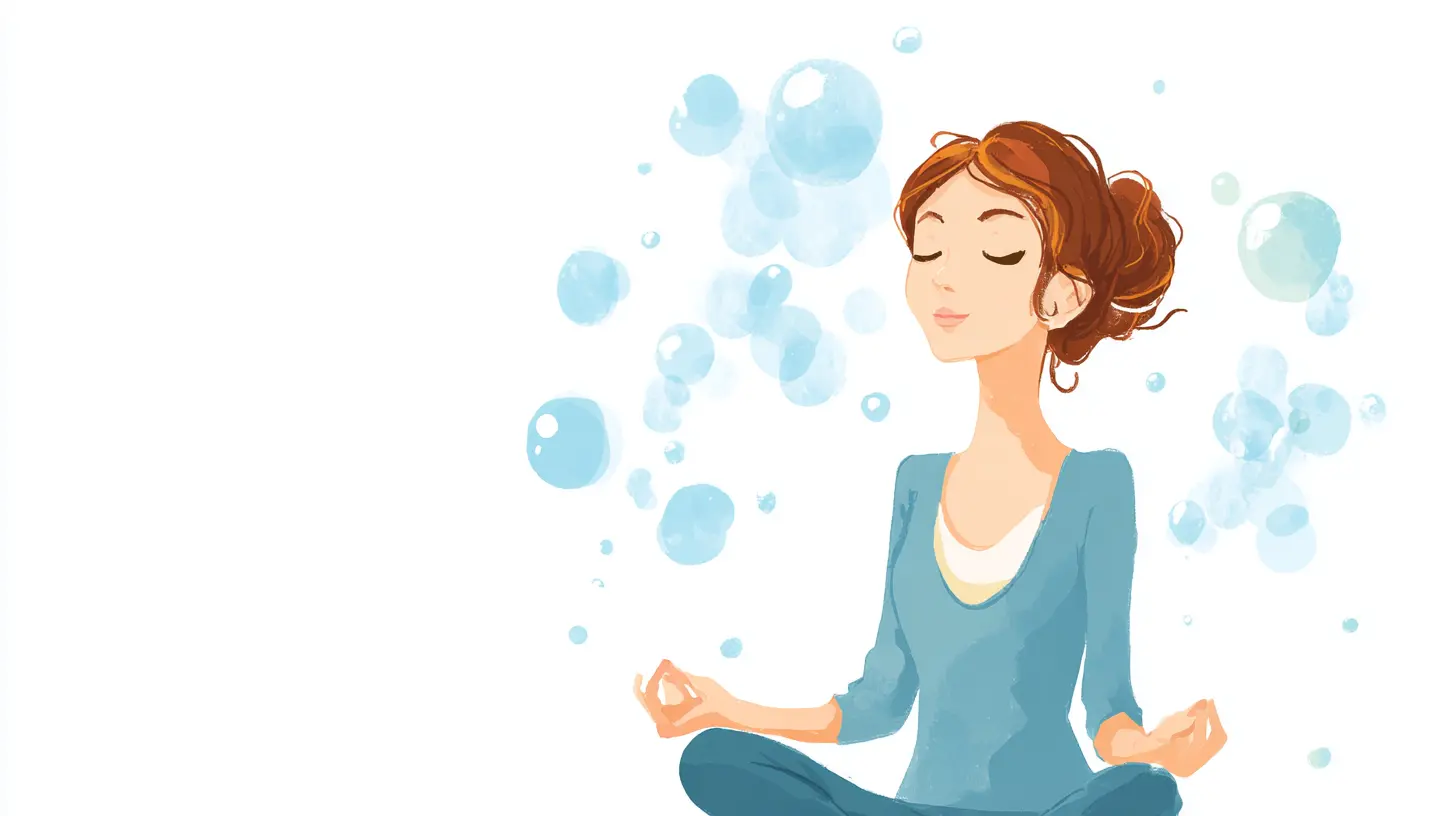
Why Breathing Works When Other Stress Tricks Fail
The breath is unique because it sits at the intersection of your voluntary and involuntary nervous systems. You do not have to think about breathing, but you can take control of it at any moment. This means that by changing your breathing pattern, you can send a signal to your brain that the threat has passed, even if the threat is just an overflowing inbox.When you are stressed, your sympathetic nervous system activates the fight-or-flight response. Your heart rate increases, your blood pressure rises, and your breathing becomes rapid and shallow. This is useful if you are running from a bear, but not so useful when you are preparing for a presentation. Mindful breathing activates the parasympathetic nervous system, which is responsible for rest and digestion. The vagus nerve, which runs from your brain to your abdomen, is the main highway for this response. Slow, rhythmic breathing stimulates the vagus nerve, and that stimulation triggers a cascade of calming effects: lower heart rate, lower blood pressure, and a sense of physical relaxation.
Here is the key point that many articles miss: the exhale is the most important part. Your heart naturally speeds up slightly when you inhale and slows down when you exhale. This is called respiratory sinus arrhythmia, and it is a normal and healthy phenomenon. By lengthening your exhale, you amplify the calming signal. This is why almost every effective breathing technique emphasizes a longer exhale than inhale.

The Physiology of a Single Deep Breath
Let us take a moment to understand what actually happens when you take a slow, deep breath. When you inhale through your nose, the air travels down your trachea and into your lungs. Your diaphragm, a dome-shaped muscle below your lungs, contracts and moves downward. This creates more space in your chest cavity, allowing your lungs to expand fully. The expansion triggers stretch receptors in your lungs, which send signals to your brainstem. Those signals help to slow your heart rate slightly. Then, when you exhale slowly, your diaphragm relaxes and moves upward, and the calming signal strengthens.If you are breathing shallowly from your chest, you are only using the upper portion of your lungs. This type of breathing is associated with the stress response. It is fast, it is inefficient, and it does not engage the diaphragm. Deep belly breathing, on the other hand, engages the diaphragm fully and massages your internal organs, which is another reason it feels good.
One common misconception is that you need to take a huge, forceful breath to get benefits. That is not true. Forceful breathing can actually increase tension and make you feel lightheaded. The goal is not to take the biggest breath possible. The goal is to take a slower, smoother, and more rhythmic breath.

The 4-6 Pattern: Your Baseline Tool
If you only remember one technique from this article, let it be the 4-6 pattern. To do it, inhale through your nose for a count of four, then exhale through your nose or mouth for a count of six. That is it. The exhale is longer than the inhale, which, as we discussed, activates the parasympathetic nervous system.Why four and six? These numbers are not sacred, but they work well for most people. A four-second inhale is long enough to fill your lungs without feeling forced. A six-second exhale is long enough to trigger the calming response without making you feel like you are running out of air. If you have a slower natural pace, you can use three and five or five and seven. The ratio matters more than the exact numbers.
Try this the next time you are waiting for a meeting to start or sitting in a parking lot. Close your eyes if you can, or just soften your gaze. Inhale for four seconds, exhale for six seconds. Repeat for five rounds. You should feel a noticeable shift in your body, perhaps a drop in your shoulders or a release of tension in your jaw. This is your nervous system responding to the new rhythm.
The 4-6 pattern is excellent for acute stress, meaning stress that hits you in a specific moment. It is not the best choice for long-term anxiety management, but for a quick reset, it is unmatched.

Box Breathing: The Focus Tool for High-Pressure Moments
Box breathing, also known as square breathing, is a favorite among athletes, military personnel, and people who have to perform under pressure. The pattern is simple: inhale for four counts, hold for four counts, exhale for four counts, hold for four counts. You are essentially tracing the sides of a square with your breath.The holds are what set box breathing apart. A retained breath, especially after an inhale, increases carbon dioxide levels in your blood. This might sound bad, but it actually has a calming effect on your nervous system. It also forces you to focus on counting, which distracts your mind from whatever is causing your stress. This makes box breathing ideal for situations where your thoughts are racing and you need something to anchor your attention.
Use box breathing before a difficult conversation, before a big presentation, or during the first few minutes of a stressful event. It is not ideal for falling asleep because the holds can be slightly stimulating. If you are trying to wind down at night, you are better off with the 4-6 pattern.
One common mistake with box breathing is holding your breath for too long. If you are new to this, a four-second hold might feel uncomfortable. That is fine. Reduce the count to three seconds. The goal is not to prove how long you can hold your breath. The goal is to create a steady, predictable rhythm that your brain can latch onto.
Physiological Sigh: The Rapid Reset
The physiological sigh has gained attention in recent years, and for good reason. It is a double inhale followed by a long exhale. You breathe in through your nose, and just before you reach the top of that inhale, you take a second, smaller sip of air. Then you exhale slowly through your mouth.Why does this work? The double inhale opens up tiny air sacs in your lungs called alveoli. When these sacs are fully inflated, they send a strong signal to your brain that the breath is complete. This signal helps to slow your heart rate very quickly. In fact, many people report feeling calmer after just one or two physiological sighs.
This is the technique to use when you are in the middle of a stressful moment and you cannot step away. You can do it in a meeting while everyone else thinks you are just taking a deep breath. You can do it while holding a crying child. You can do it while sitting at your desk with a deadline looming. It is fast, it is effective, and it is nearly invisible to other people.
The physiological sigh is not a replacement for a full relaxation practice. It is a tool for emergencies. Use it when you feel your stress level spike, and then follow up with a slower technique like the 4-6 pattern if you have the time.
Alternate Nostril Breathing: For When You Need Balance
Alternate nostril breathing, called nadi shodhana in the yoga tradition, is a more structured practice. You use your right thumb to close your right nostril, inhale through your left nostril, then close your left nostril with your ring finger, release your right nostril, and exhale through the right side. Then you inhale through the right side, close it, and exhale through the left. This is one round.The benefits of this practice are partly physiological and partly attentional. By switching sides, you are forcing your brain to coordinate a complex sequence of movements. This takes your mind off your worries and gives it a clear task. Some practitioners believe that alternate nostril breathing balances the two hemispheres of the brain, though the scientific evidence for that specific claim is thin. What is clear is that the rhythmic, slow nature of the practice is deeply calming.
This technique is best used when you have a few minutes to yourself and you want to transition between states. For example, you can use it after a stressful commute and before you walk into your house so that you do not bring work tension home. You can also use it before meditation or before a nap.
The main downside is that it requires one hand to be occupied, so it is not practical for driving or typing. It also takes a bit of practice to get the finger coordination right. Do not get frustrated if you feel clumsy at first. The clumsiness is part of the point, because it keeps your mind busy.
The 4-7-8 Technique: The Sleep Aid
The 4-7-8 technique, popularized by Dr. Andrew Weil, is a specific pattern that involves inhaling for four counts, holding for seven counts, and exhaling for eight counts. The long hold and the extended exhale make this a very powerful sedative. It is often recommended for people who struggle to fall asleep or who wake up in the middle of the night with racing thoughts.The mechanics are similar to box breathing, but the longer exhale and the longer hold shift the balance further toward relaxation. The seven-second hold can be challenging, especially if you are not used to holding your breath. If that is the case, start with a five-second hold and a seven-second exhale. Work your way up gradually.
This technique is not ideal for daytime use because it can make you feel drowsy. Use it at night, in bed, or during a break when you really need to power down. Some people also use it to manage anger or frustration, because the long exhale gives your body time to process the adrenaline rush.
A word of caution: do not do this technique while driving or operating machinery. It can lower your blood pressure and make you feel lightheaded, especially if you are not used to it. Always practice it while seated or lying down until you know how your body responds.
Common Mistakes and Misconceptions
There are several mistakes that people make when they start practicing mindful breathing. The first is trying too hard. If you force your breath, you will create tension. The breath should feel easy and smooth. If you feel like you are gasping for air, you are pushing too much.The second mistake is expecting immediate results every time. Breathing is a skill, and like any skill, it improves with practice. The first time you try the 4-6 pattern, you might not feel anything. That is normal. Your nervous system needs time to learn the new pattern. Consistency matters more than intensity.
The third mistake is using breathing as a way to avoid dealing with the source of stress. Breathing can calm your body, but it does not solve the underlying problem. If you are stressed because you have too much work, breathing will help you feel calmer, but you still need to address the workload. Use breathing as a tool to help you think clearly, not as a substitute for action.
A common misconception is that you must breathe in through your nose and out through your mouth. Nasal breathing is generally preferred because it filters, warms, and humidifies the air. It also produces more nitric oxide, which helps to dilate blood vessels and improve oxygen delivery. However, exhaling through your mouth can be useful in certain techniques, like the physiological sigh. Do not get too hung up on the route. The rhythm matters more.
Another misconception is that you need to be relaxed before you start. This is backwards. You use breathing to become relaxed. You can start from a place of high stress, and the breathing will help you come down. You do not need candles, a cushion, or a quiet room. You can do this anywhere.
Integrating Breathing Into Your Daily Routine
The biggest challenge with any relaxation technique is remembering to use it. You cannot just read about breathing and expect to remember it in the middle of a crisis. You need to build reminders into your day.One effective strategy is to attach breathing to an existing habit. For example, every time you wash your hands, do three rounds of the 4-6 pattern. Every time you get into your car, do one physiological sigh before you turn the key. Every time you sit down at your desk, do a quick box breathing cycle. These cues are easy to remember because they are already part of your routine.
Another strategy is to set a timer on your phone for a few times a day. When the alarm goes off, take one minute to breathe. This is not about being perfect. It is about creating a habit. Over time, the breathing will become automatic, and you will find yourself reaching for it without thinking.
You can also use breathing as a transition tool. When you finish a task and are about to start a new one, take a breath. When you walk through the door at home, take a breath. When you sit down to eat, take a breath. These small pauses create space between the different parts of your day, and that space reduces the feeling of being constantly rushed.
When Breathing Is Not Enough
It is important to be honest about the limits of breathing exercises. If you have chronic anxiety, panic disorder, or depression, breathing alone is unlikely to be a complete solution. It can be a valuable part of your toolkit, but you may also need therapy, medication, or lifestyle changes. There is no shame in seeking professional help. Breathing is not a substitute for medical treatment.Also, if you have a respiratory condition like asthma or COPD, you should be careful with breath holds. Holding your breath can be uncomfortable or even dangerous if your lung function is compromised. Always consult with a healthcare provider before starting any new breathing practice if you have a medical condition.
Finally, do not turn breathing into another source of stress. If you forget to practice for a few days, that is fine. If you try a technique and it does not work for you, try a different one. The goal is to find what works for your body and your life. There is no single right way to breathe mindfully.
A Simple Five-Minute Practice to Get You Started
If you want a structured way to begin, here is a simple five-minute practice you can do once a day. Find a comfortable seat or lie down. Close your eyes if you like. Spend the first minute just observing your natural breath. Notice where you feel it most, in your nose, your chest, or your belly. Do not change anything. Just watch.For the next two minutes, practice the 4-6 pattern. Inhale for four counts, exhale for six counts. Keep your breath smooth and even. If your mind wanders, gently bring it back to the counting.
For the final two minutes, let go of the counting and breathe naturally. Notice how your breath feels different from when you started. Notice the state of your body. You may feel calmer, or you may not. Both are fine. The practice is about showing up, not about achieving a specific result.
Do this once a day for a week. Then try using the 4-6 pattern in a real-life stressful situation. You will likely find that your body remembers the pattern, and the calm comes a little faster each time.
The Bottom Line
Mindful breathing is not a magical cure for stress, but it is a reliable, portable, and free tool that you can use anywhere. The key is to understand why it works, to practice the techniques that fit your situation, and to be patient with yourself. Start with the 4-6 pattern for general stress, use the physiological sigh for emergencies, and save the 4-7-8 for bedtime. Build reminders into your day, and do not expect perfection.Your breath is always with you. That is the whole point. It is the one thing you cannot lose, and it is always ready to help you find a little more calm.
all images in this post were generated using AI tools
Category:
Simple Wellness TipsAuthor:

Holly Ellison
Discussion
rate this article
1 comments
Karson McDaniel
Mindful breathing? More like a secret weapon against stress. Inhale calm, exhale the chaos... let's go!
September 3, 2026 at 2:53 AM