How Fitness Apps Are Supporting Mental Wellness Through Movement
29 September 2026
The connection between physical movement and mental health is not a new idea. Doctors have recommended exercise for mood for decades. What is new is the delivery mechanism. Fitness apps have moved from simple step counters to complex behavioral health tools, and a growing number of people now use them specifically to manage stress, anxiety, low mood, and burnout rather than to chase a personal record.
That shift deserves careful examination. Not every app that markets itself as a wellness tool is built on solid principles. Some are. Others dress up gamification in clinical language and call it therapy. This article looks at what actually works, why it works, where the limits are, and how to choose wisely.

Why Movement Affects Mental Health in the First Place
Before examining the apps, it helps to understand the underlying biology, because the quality of an app depends largely on whether it respects that biology.Moderate aerobic activity triggers the release of endorphins, but that is only part of the story. Regular movement also influences serotonin and dopamine signaling, reduces circulating cortisol over time, and promotes brain-derived neurotrophic factor, a protein involved in neuroplasticity. Sleep quality improves with consistent activity, and sleep is one of the strongest predictors of emotional regulation. There is also a psychological layer: completing a workout provides a sense of mastery, and mastery counteracts the helplessness that feeds depression and anxiety.
The practical implication is important. The mental health benefit of movement comes mostly from consistency, not intensity. A person who walks briskly for thirty minutes five days a week will generally see more mood benefit than someone who does one brutal session and then stops for two weeks. Any app worth using should therefore be judged by one question: does it make consistent, moderate movement easier to sustain?
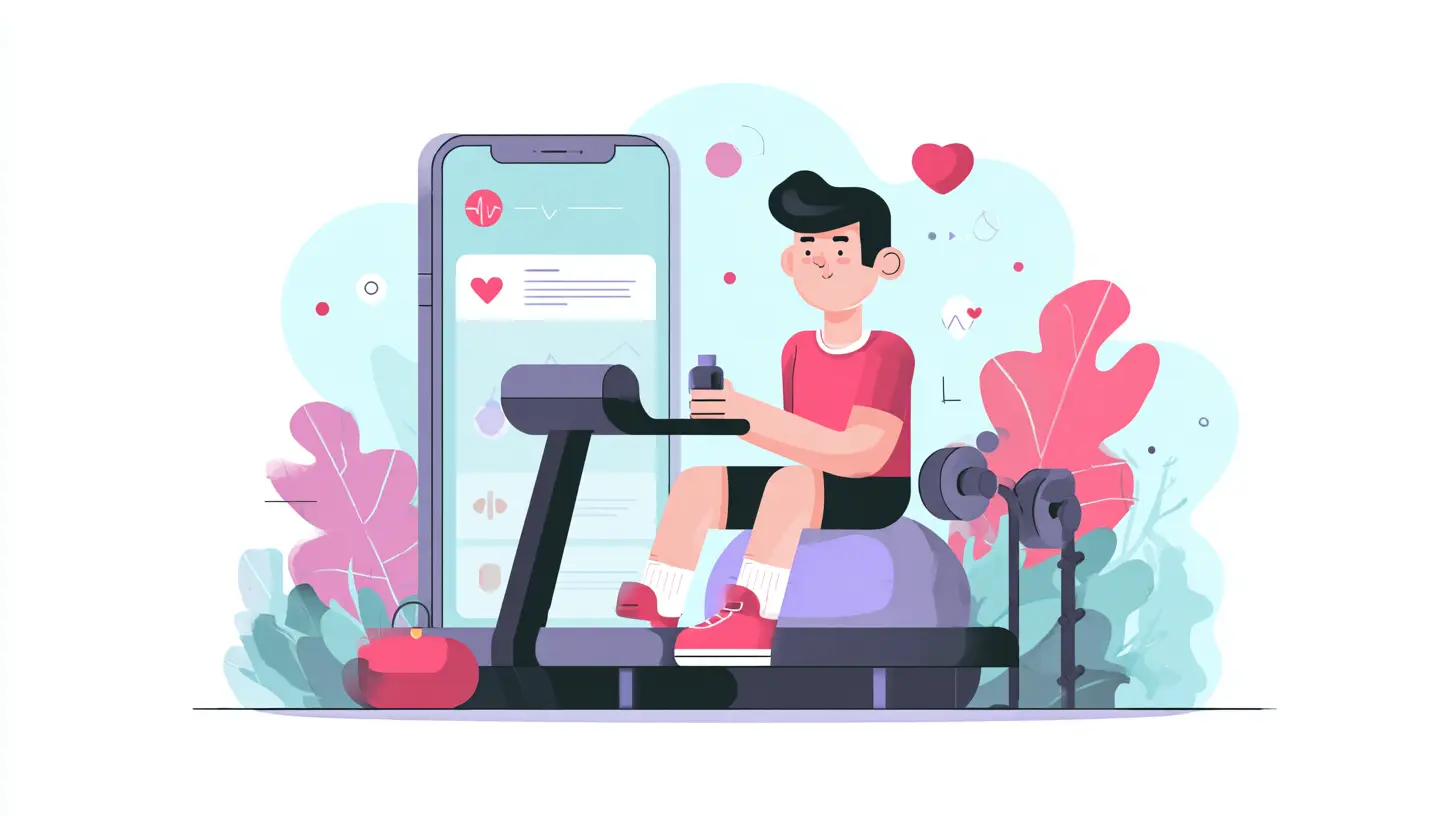
What Fitness Apps Actually Do Differently
A paper workout plan on a refrigerator door can work, but it fails for predictable reasons. It offers no feedback, no adaptation, and no accountability. Fitness apps address those gaps in several distinct ways.Behavioral scaffolding
Apps break large goals into small, scheduled actions. They send reminders, track streaks, and celebrate milestones. This is essentially applied behavioral science: cue, routine, reward. The cue is a notification. The routine is the session. The reward is a checkmark, a badge, or a visible progress bar.This works because it externalizes executive function. When someone is anxious or depressed, planning and initiating tasks becomes disproportionately hard. An app that says "your 20-minute walk is ready" removes a decision that might otherwise never get made.
Immediate feedback loops
Wearables and phone sensors capture heart rate, pace, distance, and sometimes heart rate variability. Seeing real-time data turns an abstract intention into something concrete. For many users, this transforms movement from a chore into a measurable activity with visible results.Personalization
Modern apps adjust plans based on performance history, recovery signals, and stated goals. If a user's resting heart rate is elevated or their recent sessions have been unusually hard, a well-designed app will suggest something lighter. This matters for mental wellness because overtraining can worsen mood, sleep, and anxiety rather than improve them.Community and accountability
Social features range from leaderboards to small private groups to one-on-one coaching. The evidence on accountability is mixed but leans positive when the social connection is supportive rather than competitive. A friend who notices you missed a walk can be motivating. A leaderboard that makes you feel inadequate can do the opposite.
The Mechanisms That Make Apps Work for Mental Wellness
It is tempting to treat all app features as equivalent. They are not. Some align with how behavior change actually happens, and some just look good in a demo.Habit stacking and routine anchoring
The most effective apps encourage users to attach movement to an existing routine, such as a walk right after lunch or a short mobility session before bed. This is habit stacking, and it works because it borrows the stability of an established behavior. Apps that let you set a specific time and pair it with a daily trigger tend to produce better adherence than those that only track totals.Reducing friction
Every extra tap, login, or decision is a point where a user quits. The best apps minimize setup, remember preferences, and offer short sessions for low-motivation days. A ten-minute option is not a compromise; it is often the difference between doing something and doing nothing.Mood and movement tracking together
Some apps now prompt users to log mood alongside activity. Over weeks, patterns emerge: which activities lift mood, which times of day are hardest, how sleep interacts with motivation. This data becomes a personal experiment. A user might find that evening walks reduce rumination more than morning runs, or that strength training stabilizes mood better than cardio. That kind of insight is difficult to obtain without tracking.Guided movement with a mental component
Yoga, breathwork, walking meditation, and mobility routines combine physical movement with attentional focus. Apps that deliver these with clear audio guidance serve a dual purpose: they provide the exercise stimulus and the mindfulness practice in one session. For people who find silent meditation difficult, this can be a more accessible entry point.
Where Apps Fall Short
Honest evaluation requires acknowledging limitations, and there are several.Engagement does not equal improvement
Downloading an app and opening it daily is not the same as improving mental health. Some users become focused on streaks and metrics in a way that adds pressure rather than relief. When a missed day triggers guilt, the tool has started working against its purpose.Gamification can backfire
Badges, points, and leaderboards motivate some people strongly. For others, especially those prone to perfectionism or social comparison, they amplify anxiety. The same feature that helps one user can harm another. This is not a flaw in a specific app so much as a fundamental truth about motivation: it is highly individual.Data privacy concerns
Mental health data is sensitive. An app that knows when you exercise, how you sleep, and how you rate your mood holds a detailed picture of your life. Users should check what is collected, whether it is shared with third parties, and whether the app falls under health privacy regulations. Many consumer fitness apps do not.The risk of replacing professional care
No fitness app treats clinical depression, anxiety disorders, or bipolar disorder. Movement is a supportive factor, not a treatment. An app that implies otherwise is overstepping. If symptoms are persistent, impairing, or worsening, a qualified professional should be involved.Accessibility gaps
Not everyone can walk, run, or do a standard workout. Chronic pain, disability, and medical conditions require tailored approaches. Some apps accommodate this well with seated routines, adaptive programs, and low-impact options. Many do not, and the gap is worth noting when choosing.Realistic Scenarios and What Works in Each
Abstract advice is easy to give and hard to apply. Here is how the principles play out in common situations.Scenario one: high stress, low time
A person working long hours wants to reduce tension but cannot commit to hour-long sessions. The best approach is short, frequent, low-friction movement: a ten-minute walk between meetings, a five-minute breathing and stretching routine before bed. Apps that offer micro-sessions and gentle reminders fit here. The goal is not fitness gains but nervous system regulation.Scenario two: low mood and low motivation
Starting is the hardest part. Here, the app's job is to make the first step almost trivially small. A program that begins with five-minute walks and gradually extends them works better than one that opens with a demanding plan. Streaks can help, but only if missing a day does not feel catastrophic. Look for apps with forgiving streak mechanics or "rest day" options.Scenario three: anxiety with physical symptoms
Racing heart, tight chest, and restlessness respond well to rhythmic, predictable movement. Walking, cycling, and swimming are often better tolerated than high-intensity interval training, which can mimic anxiety symptoms and feel distressing. Apps that emphasize steady-state cardio, breath pacing, and calming audio are a better match.Scenario four: rebuilding after burnout
Recovery requires underdoing rather than overdoing. The temptation to "make up for lost time" with an aggressive program usually leads to a crash. Apps that cap intensity, schedule rest, and emphasize consistency over volume serve this group best.
How to Choose an App Without Wasting Months
Most people try several apps before finding one that sticks. A few criteria can shorten that process.First, match the app to the actual goal. If the goal is mental wellness, features like mood tracking, guided breathwork, and gentle progression matter more than advanced performance analytics. If the goal is performance, the reverse is true. Trying to get both from one app often means getting neither well.
Second, test the first session. If setup takes more than a few minutes or the first workout feels intimidating, that is a signal. The right app should feel usable on a bad day, not just a good one.
Third, check the free tier honestly. Many apps offer enough in the free version to build a habit. Paying for a subscription before establishing consistency is usually premature.
Fourth, look at the tone. Does the app's language motivate you or pressure you? Notifications that say "ready when you are" land differently than ones that say "you're falling behind." Neither is objectively wrong, but one will fit you better.
Fifth, consider whether the app respects rest. Programs that never schedule recovery are poorly designed, regardless of how polished the interface looks.
Common Mistakes and Misconceptions
Several beliefs about fitness apps and mental health are widespread and worth correcting.Mistake: More data means better results. Tracking everything can become a source of anxiety. The useful signal is usually simple: did I move today, and how did I feel afterward? Everything else is optional.
Mistake: The app should be the whole plan. Apps work best as one part of a broader routine that includes sleep, nutrition, social connection, and, when needed, professional support.
Misconception: Any movement counts equally for mood. It does not. Intensity, duration, timing, and personal preference all shape the mental health effect. Finding what works for you requires some experimentation.
Misconception: If it is not hard, it is not working. For mental wellness, the opposite is often true. Sustainable, moderate, enjoyable movement tends to outperform punishing routines over months and years.
Mistake: Ignoring how the app makes you feel. If using it leaves you anxious, guilty, or obsessed with metrics, stop. The tool should reduce friction, not add it.
Best Practices for Getting Real Benefit
A few habits separate people who get lasting value from fitness apps and those who abandon them within weeks.Start smaller than feels necessary. The first two weeks are about showing up, not improving. A five-minute session done daily beats a thirty-minute session done twice.
Anchor movement to something you already do. After coffee, after lunch, after the school drop-off. The anchor does the remembering so you do not have to.
Track mood, not just activity. A simple note after each session, even one word, builds a personal dataset that tells you what actually helps.
Use the app's social features selectively. A supportive friend or small group is valuable. A public leaderboard is not for everyone.
Reassess every month. If the app is not being used, either the plan is wrong or the app is wrong. Change one variable at a time.
Keep the app in its place. It is a tool for making movement easier. It is not a therapist, a diagnosis, or a substitute for human connection.
The Bigger Picture
Fitness apps have done something genuinely useful: they have made the mental health benefits of movement more accessible to people who would never have joined a gym or hired a trainer. They lower the barrier to starting, provide structure when motivation is low, and offer feedback that makes progress visible. For many users, that is enough to build a habit that meaningfully improves how they feel.At the same time, the category is crowded and uneven. Some apps are thoughtfully designed around behavior change principles. Others are marketing exercises with a workout library attached. The user's job is to tell the difference and to stay honest about whether the tool is helping.
Movement remains one of the most reliable, low-cost, side-effect-free ways to support mental wellness. Apps are simply a delivery method. When they respect the science, reduce friction, and fit the person using them, they work. When they do not, no amount of badges will make up for it.
all images in this post were generated using AI tools
Category:
Fitness AppsAuthor:

Holly Ellison