Artificial vs. Natural Flavors: What the Label Says
21 September 2026
Walk down any grocery aisle and you will see the words everywhere. "Natural flavors" on a bag of chips. "Artificial flavors" on a box of candy. Sometimes both appear on the same label, which raises an obvious question: if a product already has natural flavor, why add an artificial one? And what do these terms actually mean in legal and practical terms?
Most people assume natural flavors are safer, healthier, or somehow more honest than artificial ones. That assumption deserves scrutiny. The reality is more complicated, more interesting, and far more useful to understand than the simple story many articles tell.
This article breaks down what these labels legally mean, how flavor compounds are actually made, where the real differences lie, and how to make sense of them when you are standing in a store trying to decide what to buy.
What the Words Legally Mean
In the United States, the terms "natural flavor" and "artificial flavor" are defined by the Food and Drug Administration. They are not marketing terms. They have specific regulatory definitions that companies must follow.The FDA defines natural flavor as a substance extracted, distilled, or otherwise derived from plant or animal material. That includes fruits, vegetables, herbs, spices, roots, bark, buds, meat, seafood, poultry, eggs, and dairy. The material can be processed in many ways, but the source must be a living organism. The purpose of the ingredient must be flavoring, not nutrition.
Artificial flavor, by contrast, is any flavoring substance that does not meet that definition. In practice, this usually means a compound synthesized in a lab from petrochemicals or other non-plant, non-animal starting materials. But here is the twist that surprises most people: a chemical can be identical to one found in nature and still be classified as artificial if it was made synthetically rather than extracted from a natural source.
That distinction matters. The molecule vanillin, for example, is the primary flavor compound in vanilla. It can be extracted from vanilla beans, which makes it a natural flavor. It can also be produced from guaiacol, a petrochemical precursor, which makes it an artificial flavor. Chemically, the two molecules are indistinguishable. Your nose cannot tell them apart. Your body processes them the same way. But the label will say different things.
This is the first major misconception to clear up: the natural versus artificial label reflects how a flavor was sourced, not what it is or how it behaves in your body.
How Flavor Compounds Are Actually Made
To understand the debate, you need a basic picture of how flavor ingredients are produced.Natural flavor production
Natural flavors start with plant or animal material. Manufacturers use processes like cold pressing, distillation, solvent extraction, or fermentation to isolate the flavor compounds. For example, orange oil can be cold pressed from orange peels. Vanilla extract can be made by soaking vanilla beans in alcohol. Essential oils from peppermint, lemon, or cinnamon are produced through steam distillation.These processes are not simple. A single natural flavor can contain hundreds of distinct chemical compounds. The characteristic aroma of a strawberry, for instance, involves dozens of different molecules working together. When a manufacturer creates a natural strawberry flavor, they are often blending extracts from multiple sources to recreate that complex profile.
Fermentation is another route. Some natural flavors are produced by microorganisms. This is still considered natural under FDA rules because the starting material is biological, even though the process happens in a tank rather than a field.
Artificial flavor production
Artificial flavors are synthesized through chemical reactions. A flavor chemist identifies the key molecules responsible for a particular taste or smell, then builds those molecules from simpler chemical building blocks. This allows for precise control, consistent quality, and low cost.The range of artificial flavors is vast. Some mimic natural substances exactly, like vanillin or ethyl butyrate, which gives pineapple its characteristic note. Others are entirely new molecules that do not exist in nature but create desirable flavor effects.
The advantage of artificial flavors is not just cost. They offer stability. A natural fruit flavor might degrade quickly, change with the seasons, or vary in intensity from batch to batch. An artificial version delivers the same experience every time. For mass-produced foods, that consistency is valuable.
Why "Natural" Does Not Automatically Mean Safer
This is where the conversation usually goes wrong. People see "natural" and assume it means wholesome, gentle, and risk-free. That is not how toxicology works.Many of the most potent toxins on earth are completely natural. Arsenic is natural. Ricin is natural. Poison ivy is natural. The word "natural" describes a source, not a safety profile.
The same logic applies to flavors. A natural flavor can contain compounds that trigger allergic reactions in some people. It can contain substances that are problematic in high doses. It can be produced using solvents and processing aids that most consumers would not recognize.
The FDA does not require natural flavors to be safer than artificial ones. Both must meet the same safety standard, which is "generally recognized as safe" or GRAS. That designation is based on scientific review, not on the source of the ingredient.
There is also the issue of disclosure. Because natural flavors can be complex mixtures, manufacturers are not required to list every component on the label. A single "natural flavor" entry might represent dozens of individual substances. For someone with a specific allergy or sensitivity, that lack of transparency can be a real problem.
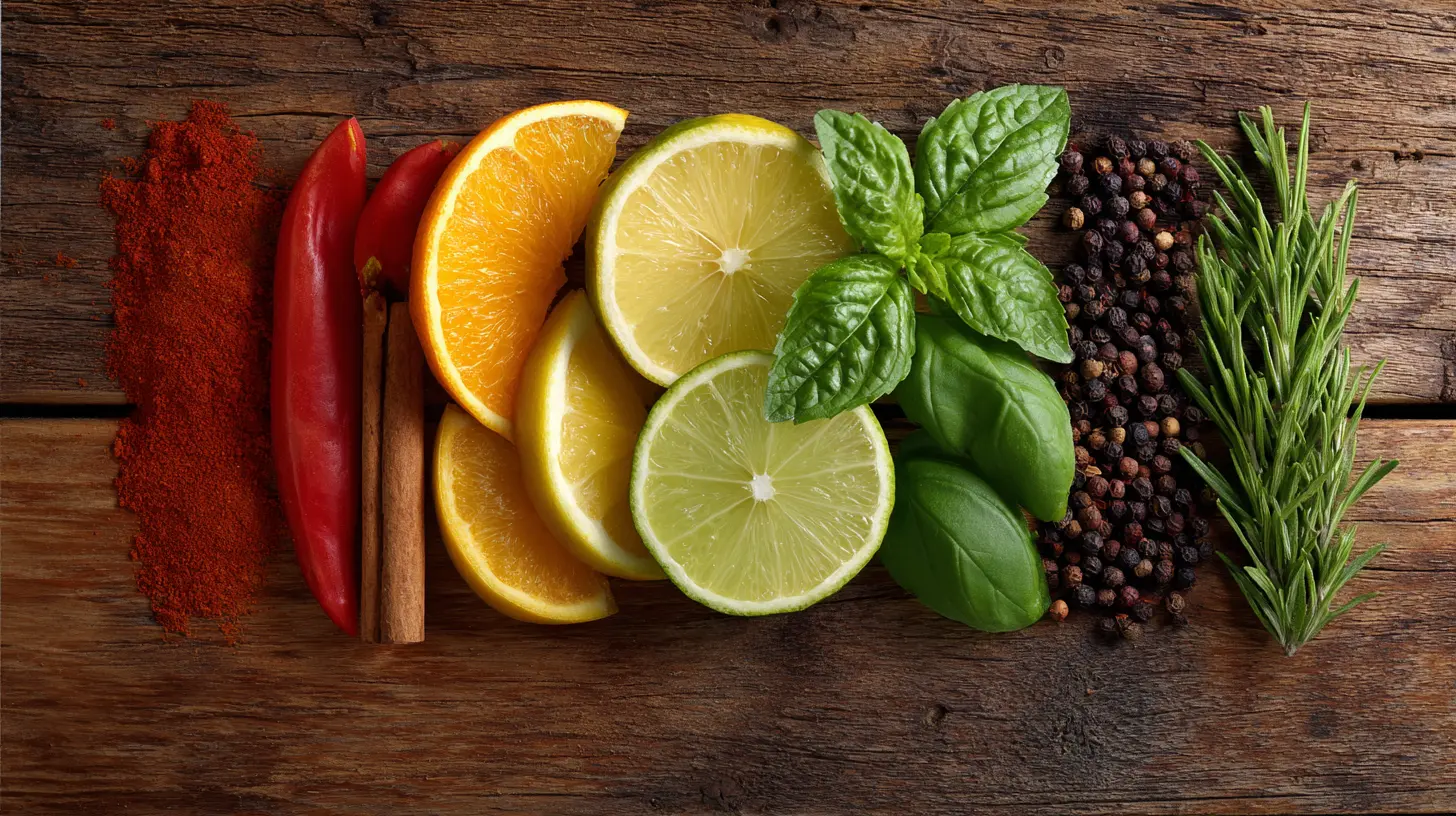
The Transparency Problem on Both Sides
Here is a point that rarely gets enough attention: both natural and artificial flavors suffer from the same labeling loophole.When you see "natural flavors" or "artificial flavors" on an ingredient list, you are not seeing the full picture. You are seeing a category, not a specific ingredient. The actual composition is considered proprietary information.
This means a product labeled as containing natural flavors could include:
- Extracts from fruits, vegetables, or spices
- Essential oils
- Fermentation products
- Compounds isolated from plant material using chemical solvents
- Ingredients derived from allergens like soy, dairy, or gluten
For most people, this is not a health concern. For someone with a severe allergy or a strict dietary pattern, it is a significant gap in information.
The same applies to artificial flavors. You will not see the individual chemicals listed. You will see the category.
If you need to know exactly what is in a flavor, your best option is to contact the manufacturer directly. Some companies will provide more detail than the label requires. Others will not. This is one area where regulations prioritize trade secrets over consumer disclosure, and it affects both natural and artificial flavors equally.
Health Considerations: What the Science Suggests
The question most people really want answered is whether artificial flavors are bad for them. The honest answer is that it depends on the specific flavor and the context, not on the category.Dose matters more than source
A flavor compound, whether natural or artificial, is present in tiny amounts in most foods. The dose is typically measured in parts per million. At those levels, the difference between a natural and artificial version of the same molecule is negligible from a physiological standpoint.The bigger health questions usually involve what else is in the food. A sugary soda with natural flavors is still a sugary soda. A processed snack with artificial flavors may also be high in sodium, refined carbohydrates, and saturated fat. Focusing on the flavor label while ignoring the overall nutritional profile is a classic case of missing the forest for the trees.
Allergies and sensitivities
Some people react to specific flavor compounds. Cinnamon, for example, contains cinnamaldehyde, which can cause irritation in sensitive individuals. That compound is natural. It is also used in artificial cinnamon flavorings.If you have a known sensitivity, the natural or artificial label tells you very little. You need to know the specific compound or source. This is where the lack of disclosure becomes a practical issue.
Long-term effects
There is no strong evidence that artificial flavors, as a category, cause long-term harm at the levels found in food. The FDA reviews flavoring substances before they enter the market, and the GRAS process, while not perfect, provides a layer of oversight.That said, the system is not flawless. Some flavoring substances have been removed from the market after new evidence emerged. Others remain in use with ongoing debate about their effects. The same is true for some natural flavors.
The takeaway is not that all flavors are safe or that all are risky. It is that the natural versus artificial distinction is a poor proxy for safety. If you want to evaluate risk, you need to look at specific ingredients and specific doses, not categories.
Cost, Consistency, and the Business of Flavor
From a manufacturer's perspective, the choice between natural and artificial flavors is often driven by practical considerations rather than ideology.Natural flavors are generally more expensive. They depend on agricultural supply chains, which are subject to weather, pests, and seasonal variation. A poor harvest can drive up prices or limit availability. The flavor profile can also vary from batch to batch, which is a problem for brands that promise a consistent experience.
Artificial flavors are cheaper, more stable, and more predictable. They can be produced year-round in controlled conditions. For a company trying to deliver the same taste in every bag of chips or every bottle of soda, that reliability is a major advantage.
There is also the question of intensity. Some natural flavors are delicate and fade over time. Artificial versions can be designed to hold up through processing, storage, and transportation.
This is why many products use a combination of both. A natural flavor might provide the base note, while an artificial flavor adds a specific top note or extends shelf life. The label will list both, but the average consumer has no way to know which is doing what.
Common Misconceptions That Need to Go
Several myths about flavors persist, and they are worth addressing directly.Myth: Natural flavors are always healthier
As discussed, safety is determined by the specific substance and dose, not the source. Natural flavors can contain allergens, irritants, and compounds that are problematic in certain contexts. The label does not tell you enough to make a health judgment on its own.Myth: Artificial flavors are synthetic chemicals, and natural flavors are not
Everything is a chemical. Water is a chemical. The air you breathe is a mixture of chemicals. The question is not whether something is a chemical but whether it is harmful at the dose present. Natural flavors are also made of chemicals, often the exact same ones found in artificial flavors.Myth: If a product says "natural," it contains no artificial ingredients
This is not true. A product can be labeled as containing natural flavors and still include artificial flavors elsewhere in the ingredient list. The word "natural" on the front of a package is a marketing term, not a regulated claim, unless it is used in a specific context like "natural flavor" in the ingredient list.Myth: Artificial flavors are banned in other countries, so they must be dangerous
Regulatory systems differ around the world. Some countries require more disclosure or have different approval processes. A flavor that is approved in one country may not be approved in another for reasons that range from scientific review to political pressure to differences in how risk is assessed. The presence or absence of a flavor in a particular market is not by itself evidence of harm.
How to Make Better Decisions in the Store
Given all this, what should you actually do when you are shopping?Focus on the whole food, not the flavor label
A product with natural flavors is not automatically better than one with artificial flavors. Look at the overall nutritional profile: added sugar, sodium, refined grains, saturated fat, and fiber. Those factors have a much bigger impact on your health than the source of a flavor compound.Read the full ingredient list
The flavor label is one data point. The full list tells you more. If a product has a long list of ingredients you do not recognize, the flavor source is probably not your main concern.Consider your personal priorities
If avoiding artificial ingredients is important to you for personal or ethical reasons, that is a valid choice. Just make it with clear eyes. You are choosing based on preference, not necessarily on safety.Contact manufacturers if you have specific concerns
If you have an allergy or sensitivity, do not rely on the natural versus artificial label. Reach out to the company and ask for details. Some will provide them. Some will not. Their response tells you something about their transparency.Be skeptical of marketing claims
The front of a package is designed to sell. "Natural" and "artificial" are used to create impressions, not to inform. The ingredient list and the nutrition facts panel are where the real information lives.The Bottom Line
The natural versus artificial flavor distinction is real in a legal sense, but it is a poor guide to health, safety, or quality. Both categories include substances that are safe for most people at typical doses. Both include substances that can cause problems for some people. Both are used in ways that prioritize consistency, cost, and shelf life over transparency.Understanding this does not mean you should ignore flavor labels. It means you should put them in context. They are one small piece of a much larger picture. The most useful thing you can do is look at the whole product, understand your own priorities, and make choices that align with them.
If you want to avoid artificial flavors, you can. If you want to avoid natural flavors, you can do that too. But do it because it matches your values, not because the label is telling you something it is not designed to tell.
all images in this post were generated using AI tools
Category:
Food Label ReadingAuthor:

Holly Ellison