Why Food Label Literacy is the Next Big Wellness Trend
11 October 2026
Wellness trends tend to arrive in waves. First came calorie counting, then macronutrient tracking, then the broad push toward "clean eating." Each of these had value, but each also had a flaw: it asked people to trust a simplified number or a marketing buzzword instead of understanding what they were actually putting into their bodies. Food label literacy is different. It is not a diet. It is a skill, and it may be the most durable wellness trend to emerge because it survives contact with real life.
The core idea is straightforward. A food label is a legal document, a marketing surface, and a nutrition summary compressed into a few square inches. Most people glance at one or two numbers and move on. A label-literate shopper reads the same panel and extracts far more: how a product is portioned, whether the front-of-pack claims hold up, what the ingredient list reveals about processing, and how the item fits into an actual day of eating. That gap in interpretation is where the trend lives.
This article breaks down why this skill is gaining traction, how to build it, where it can mislead you, and how to apply it without turning grocery shopping into a research project.

Why This Trend Is Emerging Now
Several forces are converging at once.Consumers have more access to nutrition information than ever, yet rates of confusion remain high. Front-of-pack labels shout "high protein," "keto friendly," "no added sugar," and "natural," terms that range from meaningful to almost meaningless depending on the product. As marketing language has expanded, the gap between what packages claim and what the Nutrition Facts panel shows has widened. People are starting to notice.
At the same time, chronic metabolic conditions, food sensitivities, and an aging population have pushed more shoppers to read labels for medical reasons. Someone managing sodium intake for blood pressure, someone with celiac disease, and someone tracking saturated fat after a cardiac event all need the same underlying skill, even though their targets differ.
There is also a cultural shift. After years of diet culture fatigue, many people are rejecting rigid plans in favor of something more adaptable. Label literacy fits that mood because it does not dictate what to eat. It gives you the tools to make your own call.

What Food Label Literacy Actually Means
It helps to define the term precisely, because it is often reduced to "checking calories."Food label literacy is the ability to read a nutrition panel, an ingredient list, and front-of-pack claims together, then translate that combined information into a decision that matches your personal goals. It has four components:
1. Portion awareness. Understanding that the numbers on the panel apply to a specific serving size, which may or may not match what you eat.
2. Nutrient interpretation. Knowing which nutrients matter for your situation and how the percentages relate to a daily reference value.
3. Ingredient decoding. Recognizing that ingredient lists are ordered by weight and that certain terms signal processing, additives, or hidden sources of sugar and sodium.
4. Claim skepticism. Distinguishing regulated claims from marketing language that carries little legal weight.
A person who has all four can walk into any store and evaluate a product in under a minute. A person who has only the first one is still guessing.
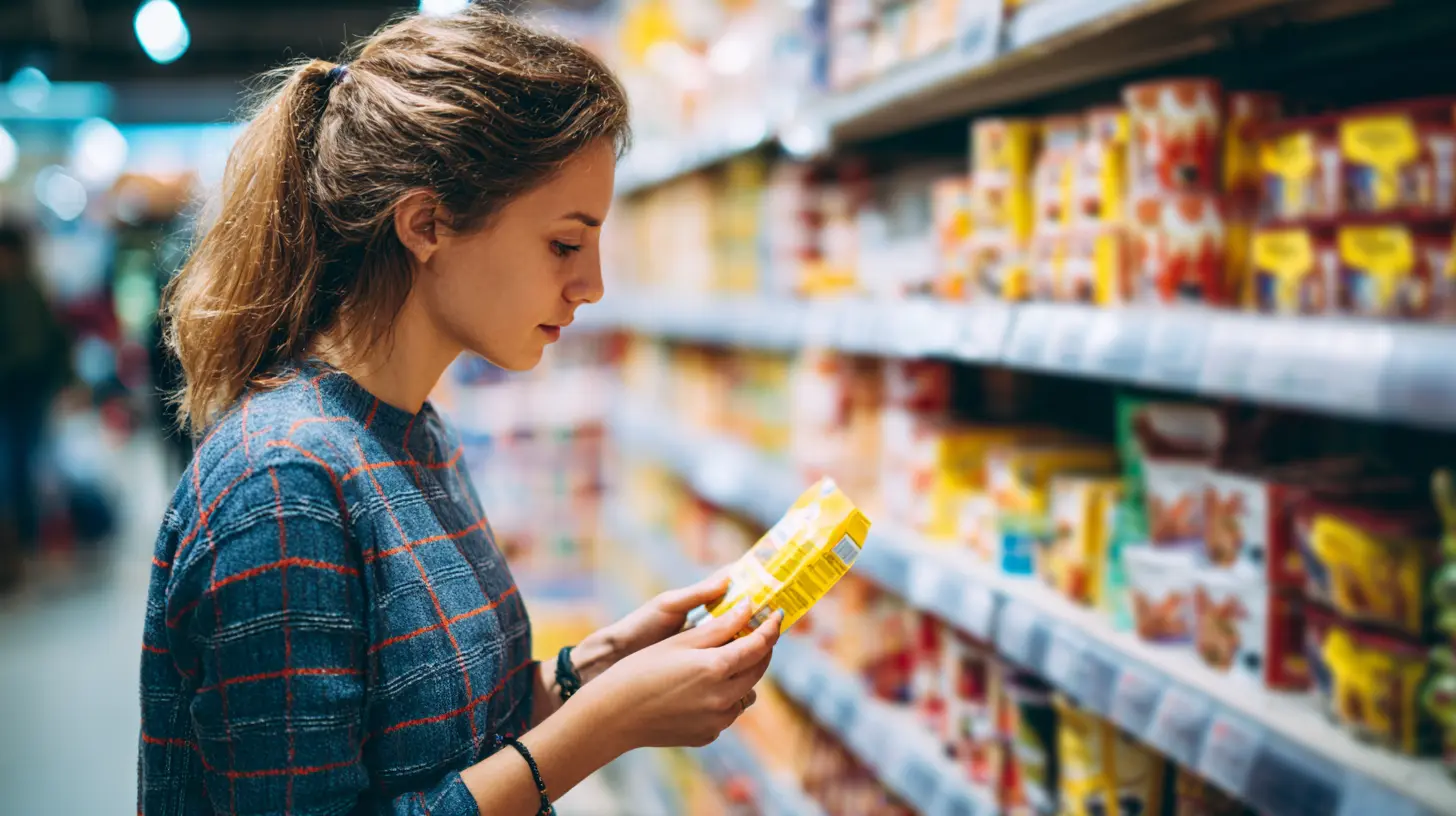
Reading the Nutrition Facts Panel Like a Practitioner
Most people read the panel top to bottom and stop at calories. A more useful approach is to read it in a deliberate order that matches how decisions are actually made.Start With the Serving Size
This is the single most important number on the panel, and it is the one most often ignored. Serving sizes are standardized for many categories, but they are not recommendations. They are the reference point for everything else on the label.A bag of chips might list 150 calories per serving, with three servings in the bag. Eat the whole bag and you have consumed 450 calories, not 150. A bottle of juice might contain two and a half servings. A frozen meal that looks like a single portion might be labeled as two.
The practical rule: before you look at any nutrient, ask whether the serving size reflects how you will actually eat the product. If it does not, multiply everything accordingly or decide the product is not worth the mental math.
Then Look at the Nutrients You Personally Track
There is no universal "good" or "bad" label. The nutrients that deserve your attention depend on your health context.If you have high blood pressure, sodium is your priority. If you have diabetes or insulin resistance, total carbohydrates and added sugars matter more. If you have high LDL cholesterol, saturated fat deserves scrutiny. If you are building muscle or recovering from illness, protein becomes central.
Reading the panel with a personal target in mind prevents the paralysis that comes from trying to optimize every number at once. It also explains why two people can look at the same label and reach different conclusions, both correct for their situations.
Understand the Percent Daily Value
The Percent Daily Value (%DV) shows how much a nutrient in one serving contributes to a daily diet based on a 2,000 calorie reference. It is a rough guide, not a personal prescription. Your actual needs vary with age, sex, activity level, and health status.A useful shortcut: 5% or less per serving is generally low, and 20% or more is generally high. This helps you scan quickly. If you are trying to increase fiber, a product at 20% DV per serving is a strong contributor. If you are limiting sodium, anything above 20% DV per serving deserves a second look.
The caveat is that %DV is based on a reference diet that may not match yours. Someone eating 1,500 calories a day will exceed the reference proportions faster than someone eating 2,500. Use %DV for comparison between products, not as a personal ceiling.
Pay Attention to Added Sugars
The addition of "added sugars" to the panel was a meaningful change. It separates sugars naturally present in foods like milk or fruit from sugars introduced during processing. This distinction matters because a flavored yogurt and a plain yogurt can have similar total sugar, but very different added sugar.That said, added sugar is not the only sugar that affects blood glucose. Total carbohydrates still matter, especially for people managing diabetes. Reading both lines together gives a fuller picture than either one alone.

The Ingredient List: Where the Real Story Often Lives
The Nutrition Facts panel tells you quantities. The ingredient list tells you composition, and it is frequently more revealing.Order Matters
Ingredients are listed in descending order by weight. The first three to five ingredients typically make up the bulk of the product. If sugar, refined flour, or a hydrogenated oil appears near the top, that tells you something the front of the package will not.This is why a "whole grain" cereal can still be mostly refined flour with a small amount of whole grain added. The claim may be technically accurate, but the ingredient order tells the fuller truth.
Sugar Wears Many Names
Added sugar is rarely listed simply as "sugar." It appears as cane syrup, corn syrup, dextrose, maltose, rice syrup, agave, honey, fruit juice concentrate, and dozens of other terms. A product can contain several of these and still list them separately, which pushes each one lower on the ingredient list than a combined "sugar" entry would appear.This is not necessarily deceptive, but it is a known limitation of the format. If you see three or four sweeteners scattered through the list, treat the product as higher in added sugar than the panel alone suggests.
Additives Are Not Automatically Harmful
Emulsifiers, stabilizers, preservatives, and flavorings have a poor reputation in wellness circles, and some deserve scrutiny. But the presence of an additive does not automatically make a food unhealthy. Many additives serve legitimate functions: preventing spoilage, maintaining texture, or keeping oil and water mixed.The more useful question is whether the product needs those additives to exist in its current form. A shelf-stable salad dressing needs emulsifiers. A fresh dressing made with oil and vinegar does not. Neither is inherently wrong; they serve different purposes. Understanding why an additive is there helps you decide whether the trade-off is worth it.
Front-of-Pack Claims: What They Mean and What They Hide
Front-of-pack claims are where label literacy pays off most visibly, because this is where marketing and regulation overlap unevenly.Regulated Claims
Some claims are legally defined and require the product to meet specific criteria. Examples include "low sodium," "good source of fiber," "reduced fat," and "gluten free." These have defined thresholds, though the thresholds vary by country.Even regulated claims can mislead by omission. A product labeled "reduced fat" must contain at least 25% less fat than the standard version, but it may contain more sugar or sodium to compensate for taste. The claim is true; the implication that it is healthier overall is not guaranteed.
Unregulated or Loosely Regulated Claims
Terms like "natural," "wholesome," "artisanal," and "clean" carry little or no legal definition in most markets. "Natural" typically means minimally processed and free of synthetic additives, but it says nothing about sugar, sodium, or calorie content. A product can be natural and still be a poor fit for your goals.The practical takeaway: treat unregulated claims as marketing, not information. They are designed to create a feeling, not to communicate a fact.
Common Mistakes and Misconceptions
Even motivated readers fall into predictable traps. Recognizing them shortens the learning curve.Mistake one: assuming "low fat" means low calorie. Fat carries more calories per gram than protein or carbohydrate, so reducing it can lower calories. But manufacturers often add sugar, starch, or thickeners to restore texture. Always compare the full panel, not just the highlighted nutrient.
Mistake two: trusting the front of the package. The front is advertising space. The back and side panels are where the regulated information lives.
Mistake three: ignoring the number of servings. This single oversight accounts for a large share of unintentional overeating. It is the most fixable mistake on this list.
Mistake four: treating all carbohydrates as identical. Fiber, starch, and sugar are all carbohydrates, but they behave differently in the body. A product with 30 grams of carbohydrate and 10 grams of fiber is not the same as one with 30 grams of carbohydrate and 2 grams of fiber.
Mistake five: assuming "gluten free" means healthier. For someone with celiac disease or gluten sensitivity, it is essential. For everyone else, gluten-free products are often lower in fiber and higher in refined starches and sugar than their conventional counterparts.
Mistake six: reading labels in isolation. A food is not healthy or unhealthy on its own. It is part of a pattern. A higher-sodium condiment used sparingly in an otherwise balanced diet is a very different situation from a high-sodium product eaten daily.
When Label Reading Helps and When It Does Not
Label literacy is a tool, and like any tool it has limits.It works best when comparing similar products within a category. Two pasta sauces, two yogurts, two breakfast cereals. In these cases, the panel gives you a clean side-by-side comparison that marketing cannot obscure.
It works less well at the edges of the store. Fresh produce, raw meat, and bulk grains often carry no nutrition panel at all, because they are single-ingredient foods. For these, label literacy is irrelevant, and general nutrition knowledge takes over.
It also has a psychological cost. For people with a history of disordered eating, detailed label scrutiny can reinforce obsessive patterns. In those cases, working with a clinician to set appropriate boundaries around label reading is more important than maximizing the skill.
Practical Strategies for Building the Skill
You do not need to memorize reference values or become a nutrition scientist. A few habits go a long way.Pick two or three nutrients that matter to you and ignore the rest for now. Master those before expanding. Trying to optimize everything at once leads to decision fatigue and abandoned habits.
Compare within categories, not across them. Comparing a yogurt to a granola bar is rarely useful. Comparing two yogurts is.
Read the ingredient list first for unfamiliar products. If the list is long and full of terms you do not recognize, that is information, not a verdict. It tells you the product is highly formulated, which may or may not matter depending on what you need.
Use the 5/20 rule as a quick scan. Less than 5% DV is low; more than 20% is high. This lets you evaluate a product in seconds.
Give yourself permission to buy the less optimal option sometimes. Label literacy is about informed choices, not perfect ones. A product that fits your life and your preferences has value even if it is not the lowest-sodium or highest-fiber option on the shelf.
The Bigger Picture
The reason food label literacy is positioned to become a lasting wellness trend is that it does not depend on any single diet philosophy. It is compatible with plant-based eating, low-carb approaches, Mediterranean patterns, and everything in between. It does not require an app, a subscription, or a coach. It requires a few minutes of attention and a willingness to look past the front of the package.It also scales. The same skill that helps you choose a breakfast cereal helps you evaluate a protein bar, a frozen meal, a condiment, or a supplement. Once you have it, you keep it.
The wellness industry has spent years selling simplified answers. Food label literacy offers something less flashy but more durable: the ability to answer the question yourself, product by product, based on what actually matters to you. That is why it is not just a trend. It is a foundation.
all images in this post were generated using AI tools
Category:
Food Label ReadingAuthor:

Holly Ellison