The Secret Behind the Popularity of AI Fitness Coaches
10 September 2026
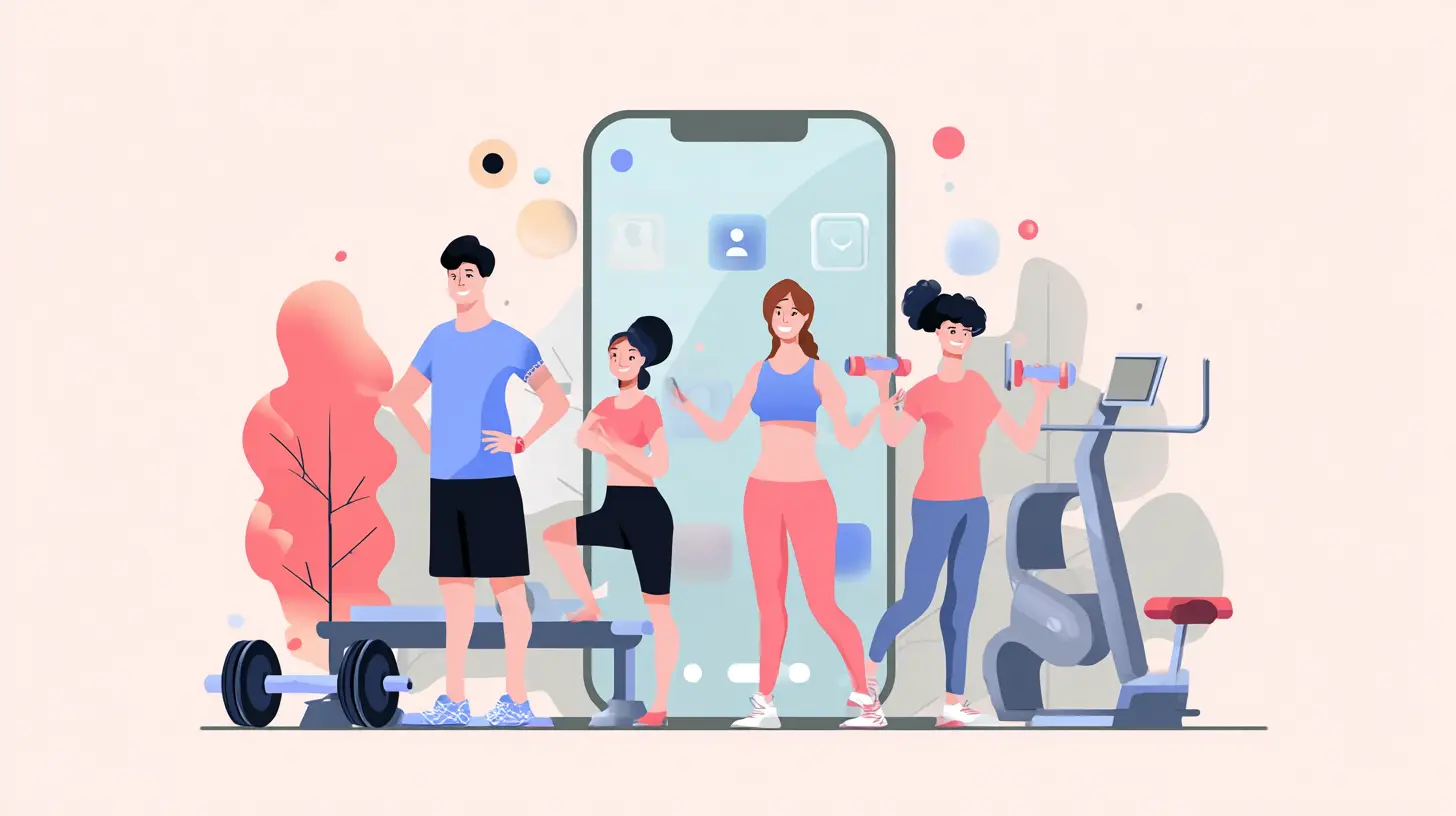
Walk into any gym today, and you will see a familiar scene. People are not just looking at their phones between sets. They are holding them up to film a squat, asking an app to count their reps, or wearing earbuds while a synthesized voice tells them to increase the pace on the treadmill. The fitness industry has been through many revolutions. There was the aerobics craze, the CrossFit box boom, and the rise of boutique cycling studios. But the current shift toward artificial intelligence is different. It is not just a trend or a piece of equipment. It is a fundamental change in how people approach their own bodies.
The popularity of AI fitness coaches is not a mystery born from clever marketing alone. It is a response to real, persistent problems that traditional fitness has never fully solved. People do not fail at exercise because they lack willpower. They fail because life gets in the way. Schedules change. Motivation dips. A human trainer expects you to show up at a specific time, and when you do not, the guilt piles up. AI does not guilt you. It simply adjusts. That flexibility, combined with the illusion of a watchful eye, has created a product that feels more personal than a workout video but more forgiving than a live session.
But there is more to the story than convenience. To understand the real secret, you have to look at the psychology of habit formation, the economics of personal training, and the quiet power of data. Let us break it down.
The End of the One-Size-Fits-All Workout Plan
For decades, the standard advice for a beginner was to pick a program from a magazine or a website. You would do three sets of ten, rest for sixty seconds, and hope for the best. That approach works for some people, but it ignores a critical variable: the individual. Your sleep quality last night, your stress level at work, your previous knee injury, your current energy at six in the morning versus six at night. A static plan cannot account for any of that.
AI coaches, at their best, are dynamic. They do not hand you a twelve-week program and walk away. They ask you how you slept. They ask how the last workout felt. They monitor your heart rate variability if you wear a compatible device. Then they make a decision. If you are overtrained, they lower the volume. If you are recovering well, they push you slightly harder. This is not gimmickry. It is the same principle that a good human coach uses, except the AI does it without ego and without fatigue. It does not get bored of your progress. It does not favor other clients. It watches your numbers and reacts.
This adaptability is the core secret. It makes the user feel seen. You are not just a body following a script. You are a dataset that is being analyzed and cared for. That feeling of being understood, even by a machine, is powerful. It keeps people coming back.
The Psychology of Accountability Without Judgment
Ask any former smoker or dieter what made them quit. Many will say they knew the risks, but the real trigger was a moment of shame. A doctor's warning, a bad photo, a comment from a partner. Shame is a terrible long-term motivator. It works for a week, then it breeds avoidance.
AI fitness coaches remove shame from the equation. When you miss a session, the app does not send a passive-aggressive text. It does not sigh when you say you ate a pizza. It asks if you want to adjust your schedule. This is not a minor feature. It is a psychological breakthrough for many people. They can log a terrible workout, one where they only managed five minutes instead of forty, and the system will simply note it and suggest a lighter session next time.
This creates a safe space for failure. And failure is necessary for growth. A human trainer might push you to finish that last rep because they are invested in your performance. An AI does not care about your performance in the moment. It cares about the long-term trend. It is willing to let you stop early so that you will come back tomorrow. That long game approach is rare in human relationships, and it is even rarer in fitness environments where contracts and results are tied to money.
The lack of judgment also helps with form. Many people are embarrassed to ask a trainer to watch them squat because they fear looking weak. With an AI coach, you can film yourself in your living room. The app analyzes your joint angles and bar path. It tells you that your hips are rising too fast or that your knees are caving in. It does not laugh. It does not roll its eyes. It just gives you a cue to fix it. This lowers the barrier for beginners who would otherwise never seek feedback.
The Financial Reality of Human Training
Let us be honest about the economics. A good human personal trainer costs anywhere from forty to one hundred and fifty dollars per hour. At two sessions per week, that is a significant monthly expense, often between three hundred and twelve hundred dollars. For that price, you get expertise, motivation, and a scheduled appointment that forces you to leave the house.
AI fitness coaches, on the other hand, cost the price of a streaming subscription. A yearly plan for a top-tier app is often less than the cost of a single month with a human. This price difference is not just a matter of luxury versus budget. It changes who can access professional-grade programming. A college student on a tight budget, a single parent with no childcare, a retiree on a fixed income. These people were previously locked out of personalized coaching. Now they have a tool that offers seventy percent of the value at five percent of the cost.
Does that mean AI will replace human trainers? Unlikely. But it forces human trainers to justify their premium. The ones who survive will focus on things AI cannot do well. They will provide hands-on adjustments, emotional support during a plateau, and the spontaneous humor that makes a workout fun. The trainers who fail are the ones who only count reps and read from a clipboard. That job is gone.
The Problem with Too Much Data
Here is where the nuance comes in. Many AI fitness apps are obsessed with data. They track your heart rate, your sleep, your steps, your calories, your recovery score. They show you charts and graphs that look impressive. But data is not knowledge. More importantly, data is not motivation.
A common mistake among new users is to treat the AI coach like a medical device. They obsess over their resting heart rate or their sleep score. They cancel a workout because the app says their recovery is low, even though they feel great. This is a misapplication of the technology. The recovery score is a guess based on physiological markers. It does not know that you had a great conversation with a friend this morning and you are mentally ready to crush a heavy lift.
The best AI coaches are the ones that use data as a suggestion, not a verdict. They ask you how you feel before they show you the numbers. They allow you to override their recommendation. This is crucial. If you blindly follow a machine, you lose the most important skill in fitness: interoception, or the ability to listen to your own body. AI should enhance that skill, not replace it.
Another data problem is the accuracy of the sensors. A wrist-based heart rate monitor is not as accurate as a chest strap. During high-intensity intervals, wrist monitors often lag or fail. If your AI coach is adjusting your workout based on that lagging data, it might make poor decisions. You might be pushed too hard because your heart rate reading was artificially low. Or you might be held back because it spiked falsely. Users need to understand the limitations of their hardware before they trust the software blindly.
The Trade-Off Between Personalization and Generalization
AI fitness coaches are often marketed as fully personalized. The truth is more complicated. A truly personalized program would require a full medical history, a biomechanical assessment, and access to your daily stress levels. Most apps do not have that. They have your age, weight, height, and a questionnaire you filled out in five minutes.
Instead, these apps use a clever trick. They take a large library of pre-built workouts and they filter them based on your goals and equipment. This is not true personalization. It is smart organization. The workout you get on day one is probably very similar to the workout that the forty-year-old accountant in another state gets on day one. The difference appears over time as the algorithm tweaks the weights and reps based on your performance.
This is not a bad thing. It is actually a strength. Good programming is built on proven principles like progressive overload and periodization. The AI does not need to invent a new exercise. It needs to select the right one from a validated list and adjust the variables. The mistake is expecting the AI to do something it cannot do, like design a rehabilitation protocol for a specific shoulder impingement or prepare you for a strongman competition. For those goals, you need a human with specialized knowledge.
Understanding this trade-off helps set realistic expectations. Use an AI coach for general fitness, weight loss, or basic strength. Do not use it for niche performance goals or if you have a complex medical condition. That is like using a GPS to drive through a desert with no roads. The GPS is great on highways, but it will fail when the terrain is uncharted.
The Social Component That Is Often Missing
Humans are social creatures. For many, the gym is a community. You have a spotter, a lifting partner, or just a familiar face at the front desk. AI fitness coaches are solitary by nature. You interact with a screen. This is a major drawback for people who thrive on social support.
Some apps have tried to solve this with social feeds or leaderboards. You can share your workout summary with friends or compete in a step challenge. This works for some, but it can backfire. Comparing your progress to others can lead to discouragement, especially if you are a beginner. A leaderboard is motivation for the top ten percent, but it is demoralizing for the bottom half.
The best approach is hybrid. Use an AI coach for the programming and the analytics, but pair it with a human community. Join a running club. Find a workout buddy who does the same app. Post your lifts in a subreddit. The AI handles the "what to do" and the "how much." The human community handles the "keep going" and the "you got this."
If you are someone who needs external accountability, meaning you only work out if someone is waiting for you, then an AI coach might not be enough. The app cannot call you out for skipping a session. It cannot meet you at the park. That social contract is powerful, and no algorithm has replicated it yet.
Real-World Examples of How People Actually Use AI Coaches
Consider a busy nurse who works twelve-hour shifts. Her schedule is chaotic. Some weeks she works nights, some weeks she works days. A traditional gym class is impossible. A personal trainer is impractical because her schedule changes monthly. She uses an AI coach on her phone. On a good week, she does four sessions. On a bad week, she does one. The app never penalizes her. It just adjusts the next session based on her available time. After six months, she has lost weight and gained strength, not because the AI was magical, but because it removed the barrier of planning.
Now consider a retired man who used to lift weights in his twenties. He wants to get back into shape but is terrified of injury. He uses an AI app that has a library of exercise videos. He films himself doing a goblet squat. The app tells him his depth is good but his heels are lifting at the bottom. He corrects it. A human trainer would have done the same thing, but the man would have had to drive to the gym and pay for a session. Instead, he does this in his garage at six in the morning. The convenience does not just save time. It saves the workout itself. He is more likely to do it because it is easy.
On the flip side, there is the athlete who makes a common mistake. He buys an AI coach that is designed for general fitness, but he is training for a marathon. The app keeps giving him strength workouts that fatigue his legs. He ignores the app's recovery recommendations and runs anyway. He ends up overtrained. This is a case where the user expected the tool to be something it was not. The app is not bad. It is just the wrong tool for the job.
The Role of the Camera and Computer Vision
One of the biggest recent advances in AI fitness is computer vision. This is where the camera on your phone watches you exercise and gives real-time feedback on your form. It can count your reps, measure your range of motion, and detect asymmetry between your left and right sides.
This is a game changer for people who work out at home. Previously, home workouts were blind. You followed a video, but you had no idea if your back was rounding during a deadlift. You could feel it, but you could not see it. Now the AI can see it. It can tell you to brace your core or push your knees out.
The trade-off here is privacy. Some users are uncomfortable with the camera always being on. The good apps process the video locally on your device and do not upload it to the cloud. But not all apps are transparent about this. Before you choose an AI coach that uses camera tracking, read the privacy policy. Understand what data is collected and where it goes. If the app requires an internet connection to process video, assume that your exercise footage is being stored somewhere. For most people, this is a minor risk. For a public figure or someone with a sensitive job, it could be a serious issue.
Why Some People Quit AI Coaches
It is not all success stories. Many people download an AI fitness app, use it for two weeks, and then abandon it. The reason is rarely the technology. It is usually the lack of a compelling goal.
AI coaches are excellent at optimizing the "how" of fitness. They are less effective at defining the "why." If you do not have a clear reason for working out, the novelty of the app wears off quickly. The charts become boring. The workouts feel repetitive. You need a human element to remind you why you started.
Another reason for quitting is the feedback loop. With a human trainer, you get immediate praise. "Good job" or "That was strong" feels good. An AI coach might say "Workout complete" but it does not feel the same. The praise is hollow because you know it is a script. To combat this, successful users often create their own rewards. They treat themselves to a nice meal or a new book after a month of consistency. They externalize the reward system.
What to Look For in a Quality AI Fitness Coach
If you are considering an AI fitness coach, do not just pick the one with the best advertisement. Look for specific features that indicate quality.
First, look for a strong onboarding process. The app should ask detailed questions about your experience level, your equipment, your injuries, and your schedule. If it only asks for your age and weight, it is too shallow.
Second, check if the app allows you to adjust the workout based on how you feel. A good app will have a "rate your energy" or "rate your soreness" function that changes the session. If the app ignores your subjective feedback, it is not truly adaptive.
Third, look at the exercise library. Does it have videos for every movement? Can you slow down the video? Can you see the muscle groups being targeted? A good library is essential for learning proper form.
Fourth, consider the company behind the app. Do they employ certified trainers and exercise physiologists? Or is it just a bunch of software engineers guessing? Look for apps that are transparent about their advisory board. This is a sign of credibility.
Finally, check the integration with your other devices. If you wear a smartwatch, does the app sync with it? Does it use your heart rate data to adjust your intensity? This can be helpful, but as mentioned earlier, do not let the data override your own perception of effort.
The Future of AI in Fitness
Looking ahead, the next generation of AI fitness coaches will likely incorporate voice interaction more deeply. Instead of tapping on a screen, you will talk to your coach. "I had a bad night of sleep," you will say. The coach will respond, "No problem, let us do a light mobility session today." This conversational interface will make the experience feel even more human.
We will also see AI coaches that integrate with other health data. Your blood pressure, your glucose levels, your menstrual cycle. These factors affect performance and recovery. A truly smart coach will consider all of them.
But there is a danger. As AI becomes more advanced, there is a risk of dependency. People might stop thinking for themselves. They might trust the algorithm over their own instincts. The best users of AI fitness will be the ones who treat it as a consultant, not a boss. They will ask questions, they will override decisions, and they will use the data to understand their own bodies better.
A Balanced View
The popularity of AI fitness coaches is not a fad. It is a logical response to a world where time is scarce, personal training is expensive, and people want guidance without judgment. The secret is not that the AI is smarter than a human. It is that the AI is more available, more consistent, and more patient than a human can ever be.
It will never replace the warm hand on your shoulder that tells you to keep going when you want to quit. It will never share a laugh with you after a brutal workout. But it will be there at five in the morning when no one else is awake. It will be there on your rest day, reminding you to stretch. It will be there when you travel for work, offering a hotel room workout that requires no equipment.
That reliability is the true secret. It is not about artificial intelligence replacing natural human connection. It is about using a tireless machine to build the discipline that allows you to show up for yourself. When you understand that, the popularity of AI fitness coaches makes complete sense. They are not selling a workout. They are selling a promise that you can start again tomorrow, no matter what happened today.
all images in this post were generated using AI tools
Category:
Fitness AppsAuthor:

Holly Ellison
Discussion
rate this article
2 comments
Katie Barrett
This article really highlights an important shift in fitness. AI coaches offer a personalized approach that can motivate many people to stay on track. I love the idea of blending technology with health. It's exciting to see how innovation can help us all reach our fitness goals.
September 17, 2026 at 5:10 AM
Holly Ellison
Thanks for your insights! I'm glad you see the potential in AI coaches. Blending tech and fitness truly opens up new possibilities for everyone.
Clover Moore
AI fitness coaches are revolutionizing the way we approach health and wellness. With personalized plans and instant feedback, they make fitness more accessible and engaging. Embrace the technology, stay motivated, and remember that every small step leads to big changes in your journey. Keep going!
September 10, 2026 at 3:41 PM
Holly Ellison
Absolutely! AI fitness coaches are making a significant impact by tailoring experiences and keeping us engaged. It's exciting to see how technology can enhance our health journeys. Every step counts!