The Psychology Behind Why Fitness Apps Keep You Hooked
3 November 2026
Fitness apps have a strange power over us. You open one to log a quick walk, and forty minutes later you are comparing your weekly step count against a stranger in your office, chasing a badge for "seven days in a row," and genuinely annoyed that your ring did not close. Nobody forced you to care about that ring. Yet here you are, emotionally invested in a digital circle.
That is not an accident. The best fitness apps are psychological machines dressed up as helpful tools. They borrow from behavioral science, game design, and habit research, sometimes deliberately, sometimes as an emergent side effect of good product thinking. Understanding those mechanisms is genuinely useful, whether you want to build a sustainable routine, decide which app deserves your money, or simply stop feeling manipulated by your own phone.
This article breaks down the psychology honestly: what works, why it works, when it backfires, and what to do about it.

Why Fitness Apps Are Designed to Be Sticky
A fitness app has an awkward business problem. Its purpose is to make you healthier, which ideally means you eventually need it less. But its survival depends on you opening it often. That tension explains a lot of the design choices you see.The industry term is engagement, and engagement is measured through proxies: daily active users, session frequency, streak length, notification open rates. Product teams are rewarded for moving those numbers up. Some of that pressure produces genuinely helpful features. Some of it produces dark patterns that make you feel busy without making you fitter.
The key insight is that stickiness itself is morally neutral. A habit loop that gets you walking every morning is good. A habit loop that gets you opening an app to collect virtual coins while sitting on your couch is not. The psychology is the same in both cases. The outcome depends on what the loop is attached to.
The Habit Loop: Cue, Routine, Reward
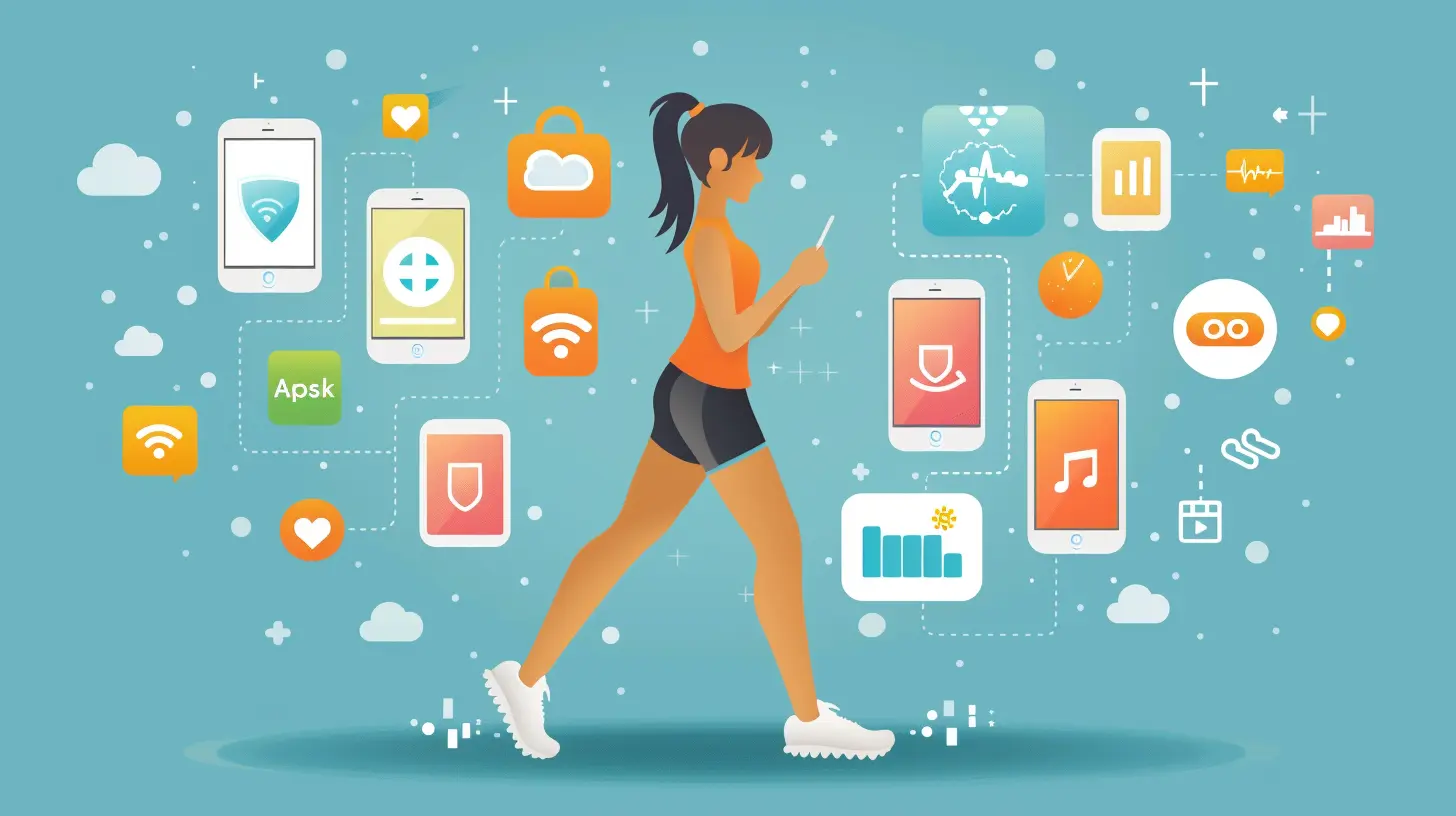
Most fitness apps are built on the classic habit loop: a cue triggers a routine, and a reward reinforces it. The stronger and more immediate the reward, the faster the habit forms.In practice, the cue is usually a push notification or a home screen widget. The routine is opening the app, logging something, or starting a workout. The reward is a checkmark, a progress bar filling up, a streak counter ticking over, or a cheerful animation.
Here is why this works better than your own good intentions. Rewards that arrive immediately are far more powerful than rewards that arrive weeks later. The health benefit of a walk is real but invisible today. The green checkmark is visible right now. Apps essentially borrow motivation from the future and pay it out in the present.
The catch is that you can become dependent on the reward rather than the behavior. I have seen people who genuinely enjoy walking but feel oddly hollow doing it without logging it. The app has inserted itself between the activity and the satisfaction. That is worth noticing in yourself. If the only reason you are moving is the checkmark, the habit is fragile. If the checkmark is a nice bonus on top of feeling good, you are in a healthy place.

Variable Rewards and the Slot Machine Effect
The most powerful psychological lever in consumer apps is variable reward, the principle that an unpredictable payoff is more motivating than a predictable one. This is the same mechanism that makes slot machines compelling, though fitness apps apply it in gentler forms.Think about what happens when you finish a workout in a well-designed app. Sometimes you get a normal summary. Sometimes you get a surprise badge, a new personal record celebration, or a "you are in the top 15 percent this week" message. You cannot predict which. That uncertainty keeps you checking.
Why does unpredictability matter so much? Because the brain releases more dopamine in anticipation of an uncertain reward than a certain one. Dopamine is less about pleasure and more about motivation and attention. It is the "pay attention, something might happen" chemical. A predictable reward becomes background noise quickly. An unpredictable one keeps the system alert.
This is fine when the reward is tied to real behavior. It becomes a problem when the reward is decoupled from effort, for example when apps hand out badges for opening the app or completing trivial actions. A badge for "logged in three days in a row" teaches you nothing about fitness. It teaches you to log in. Watch for which behaviors the rewards actually target.

Streaks: Brilliant, Effective, and Slightly Dangerous
Streaks are the single most effective retention mechanic in fitness apps, and also the one most likely to mess with your head.The psychology is clean. A streak creates a small accumulation of value that you do not want to lose. Loss aversion, the well-documented tendency for losses to feel roughly twice as painful as equivalent gains feel good, does the rest. Breaking a 60-day streak hurts more than missing a random Tuesday. So you do the workout, sometimes when you should not.
Streaks work best for low-friction, genuinely repeatable behaviors: a daily walk, a short mobility session, hitting a step target. They work poorly for intense training, where rest days are part of the program. This is the classic mistake. Someone on a streak-driven app starts doing hard workouts seven days a week because the counter demands it, then gets injured or burned out, then quits entirely. The streak optimized for app engagement, not for physiology.
If you use a streak-based app, decide in advance what your streak means. Is it "I moved my body today," which can include a gentle walk? Or is it "I did a full workout," which should include rest days? Many apps let you configure this, and a few offer streak freezes or rest day tokens. Use them. A streak with a built-in rest day is a sustainable habit. A streak that punishes recovery is a trap.
Social Comparison: The Double-Edged Leaderboard
Humans are deeply social creatures, and fitness apps exploit this in ways both wonderful and corrosive.The wonderful version is accountability. A friend who notices you skipped your Tuesday run, or a group challenge where your team is counting on your steps, creates gentle social pressure that genuinely helps. This is especially powerful for people who struggle with self-motivation. Knowing someone else will notice is often enough.
The corrosive version is upward social comparison. Leaderboards almost always show you someone doing more than you. That can motivate briefly, but chronic comparison to people who are fitter, younger, or simply less busy tends to produce two outcomes: you push too hard, or you feel inadequate and disengage. Research on social comparison consistently finds that comparing upward can inspire in the short term but erodes motivation over time when the gap feels unbridgeable.
A useful rule: use social features for accountability, not for ranking. Compete against your past self, or join small groups of people at a similar level. If a leaderboard makes you feel bad about your Tuesday walk, that feature is not serving you. Many apps let you hide leaderboards or switch to private mode. There is no shame in using it.
Gamification: When Points Help and When They Distract
Gamification means applying game elements, points, levels, badges, quests, to non-game activities. It is everywhere in fitness apps, and its effectiveness depends entirely on fit.Gamification works well when it reduces friction for a behavior you already vaguely want to do. If you want to walk more and a points system makes the walk more fun, great. It also works well for people who enjoy structured goals and visible progress.
It works poorly when the game becomes the point. This is the "points for points' sake" problem. You start optimizing for the game's rules rather than your actual goal. A classic example: an app rewards minutes of activity, so you log long, slow, low-intensity sessions to farm minutes, even though your actual goal was to get stronger. Or an app rewards closing your calorie ring, so you obsess over the number rather than how you feel.
There is also a subtler issue: extrinsic rewards can crowd out intrinsic motivation. If you already enjoy running, adding a points system can, over time, make running feel like a chore you do for points. Psychologists call this the overjustification effect. It does not always happen, but it is worth watching for. If you notice yourself enjoying an activity less once you started gamifying it, that is a signal to strip the game layer back.
Personalization and the Illusion of Being Known
Good fitness apps feel eerily personal. They remember your preferences, adapt recommendations, and greet you by name. This is partly genuine personalization and partly the illusion of it, and the difference matters.Real personalization, adapting workout difficulty based on your logged performance, is genuinely useful. It keeps you in the right zone: challenged but not crushed. Apps that adjust based on your actual data tend to produce better adherence because the difficulty curve fits you.
The illusion of personalization is different. It is the "Hi Sarah, ready to crush your goals today?" message that is identical for everyone. It feels personal but is not. This is not necessarily malicious, but it is worth recognizing, because it can create a false sense of a relationship. You are not letting down a coach when you skip a workout. You are not letting down a person at all. You are letting down a notification.
The practical takeaway: treat personalization as a tool, not a relationship. Use the features that genuinely adapt to you. Ignore the ones that just use your name.
The Feedback Loop: Progress You Can See
One of the most genuinely valuable things fitness apps do is make invisible progress visible.Fitness progress is slow and quiet. You get a little stronger, a little faster, a little more resilient, and none of it is obvious day to day. This is why so many people quit: they cannot see the change. Apps fix this by graphing your steps, charting your lifting volume, showing your resting heart rate trending down over months.
This is real psychology, not a trick. Visible progress supports self-efficacy, the belief that you are capable of doing the thing. Self-efficacy is one of the strongest predictors of whether someone sticks with an exercise program. Seeing evidence of your own capability builds it.
The mistake people make is over-trusting the numbers. A single bad week on a chart can feel like failure when it is just noise. Weight fluctuates. Step counts vary with weather and work. Resting heart rate moves with sleep and stress. Use trends over weeks, not days. And remember that the most important progress, how you feel, how clothes fit, how stairs feel, is not always captured in a graph.
Notifications: The Line Between Nudge and Nag
Push notifications are the most direct psychological tool an app has, and the most abused.A well-timed notification is a cue that arrives when you are likely to act. A gentle reminder at 6 p.m. that your evening walk is waiting can be genuinely helpful. A notification that arrives during a meeting, or at 9 a.m. on a Sunday, is just noise.
The problem is that notification frequency is usually tuned for engagement, not for your life. Apps send more notifications because more notifications correlate with more opens, at least in the short term. Over time, though, notification fatigue sets in, and people either ignore them or turn them off entirely.
Best practice is to audit your notifications once a month. Turn off everything except the one or two that actually help you. Most apps let you customize this. If an app does not, that tells you something about its priorities.
Common Mistakes and Misconceptions
A few patterns come up again and again.Mistake one: letting the app define success. The app's metrics, steps, calories, minutes, are proxies. They are not your goal. Your goal might be feeling energetic, getting stronger, sleeping better, or simply moving more. If the metrics stop serving the goal, drop the metrics.
Mistake two: chasing streaks through injury. Covered above, but worth repeating. A streak is a tool. Your body is not.
Mistake three: trusting calorie estimates too much. Calorie burn estimates from wearables and apps are rough. They can be useful for relative comparison, this workout versus that one, but they are not precise. Do not eat back your estimated burn as if it were gospel.
Mistake four: assuming more data means more progress. Tracking everything can become a full-time job. More data is not always better. Track what you will actually use.
Misconception: gamification is for beginners. Not true. Plenty of experienced athletes use apps for structured training and enjoy the game elements. It depends on the person, not the level.
Misconception: if an app is popular, it must be good for you. Popularity reflects marketing and engagement design as much as effectiveness. The most popular app is not necessarily the best fit for your goals.
How to Use This Psychology to Your Advantage
You can turn the tables. Instead of being the user the app is designed to hook, become the designer of your own experience.Choose apps whose incentives align with your goals. If your goal is consistency, pick an app that rewards showing up, not one that rewards maximum intensity. If your goal is strength, pick one that respects rest days.
Set your own reward structure. Decide in advance what counts as success for you, and let the app's badges be a bonus, not the definition.
Use social features deliberately. Join a small accountability group. Hide leaderboards that make you feel bad. Compete against your past self.
Audit notifications monthly. Keep the ones that help. Kill the rest.
Build in rest. Configure streaks to allow rest days. If the app does not allow it, use a streak freeze or simply accept that the streak will break and that this is fine.
Watch for the overjustification effect. If you notice yourself enjoying an activity less because of the app, strip the app back. The activity came first.
Remember the app is a tool, not a coach, not a friend, and not a judge. It cannot see you. It cannot know how you feel. It is a very sophisticated set of prompts and charts. Use it, but do not let it use you.
The Bottom Line
Fitness apps keep you hooked because they are built on real, well-understood psychology: habit loops, variable rewards, loss aversion, social comparison, and visible progress. None of that is inherently bad. The same mechanisms that keep you opening an app can keep you walking, lifting, and showing up for yourself.The difference between a helpful app and a manipulative one is whether the loop is attached to something that actually serves you. That is a question only you can answer, and it is worth answering honestly. Pick apps that respect your rest, reward the behaviors you actually care about, and make progress visible without making you feel small.
Then use them, enjoy them, and occasionally put the phone down and just go for a walk. The walk counts even if nobody logs it.
all images in this post were generated using AI tools
Category:
Fitness AppsAuthor:

Holly Ellison
Discussion
rate this article
1 comments
Runevale McAdams
In the dance of pixels and plans, motivation blooms, fueling our journey to wellness.
November 3, 2026 at 4:04 AM