The Connection Between Sleep and Hitting Your Fitness Targets
18 September 2026
You can dial in your macros, train with perfect form, and track every rep, but if you are sleeping five or six hours a night, you are leaving results on the table. Sleep is not a passive gap between workouts. It is an active physiological process that decides how well your body repairs muscle, manages hormones, regulates appetite, and converts training stress into actual adaptation. Ignore it and your fitness targets get harder to reach, no matter how disciplined you are during the day.
This article breaks down the real mechanisms behind that connection, what happens when sleep falls short, and how to fix it without turning your life upside down.
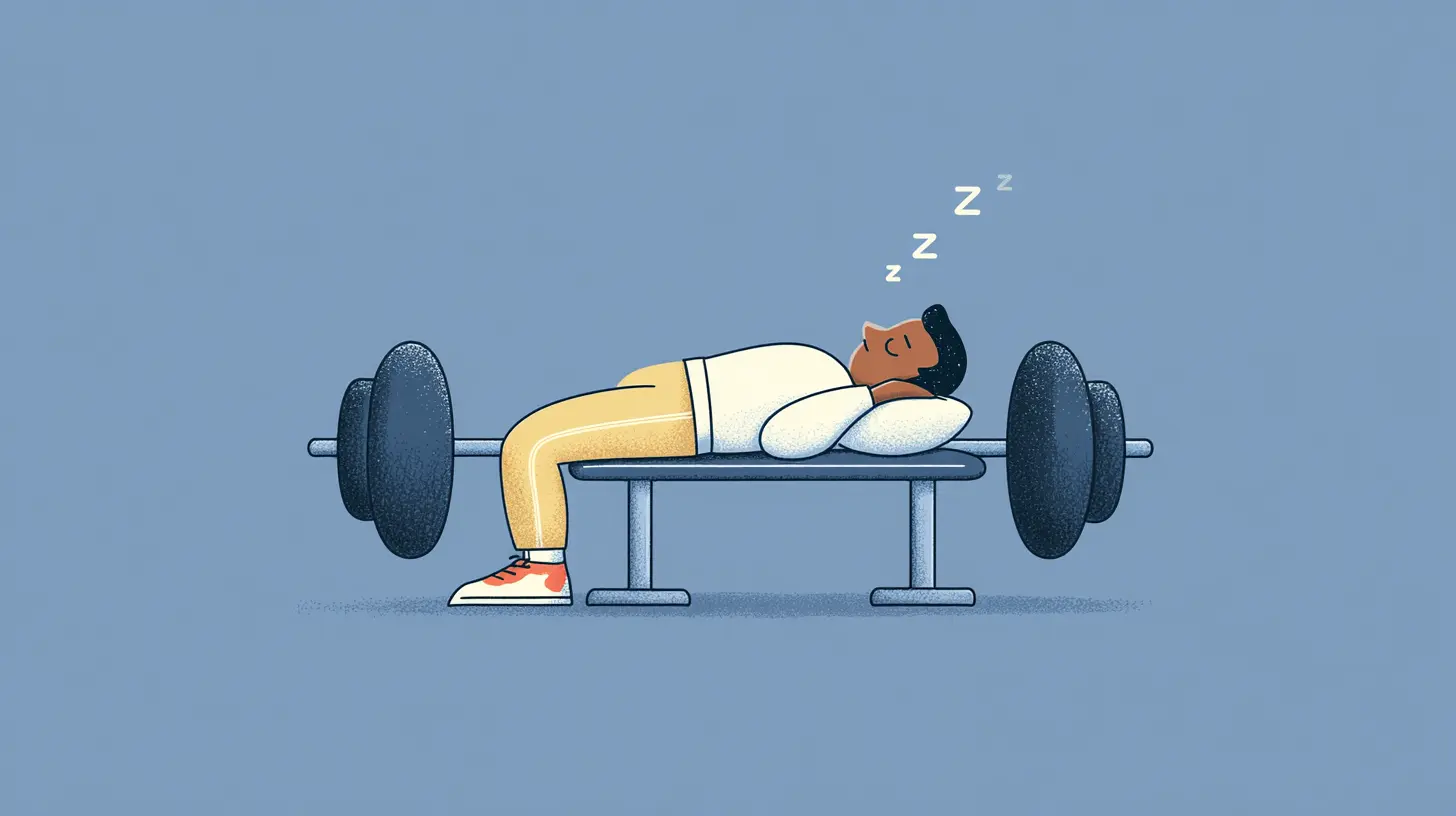
Why Sleep Is a Training Variable, Not a Lifestyle Extra
Most people treat sleep as the thing that happens after everything else is done. Training and nutrition get scheduled. Sleep gets whatever is left. That order is backwards.When you train, you create a stimulus. You tear muscle fibers, deplete glycogen, stress your nervous system, and trigger a cascade of hormonal signals. None of that makes you stronger or leaner on its own. Adaptation happens during recovery, and the deepest, most restorative phases of that recovery happen while you sleep. Skip the sleep and you skip the adaptation. You did the work but never collected the payment.
Think of it like this: training is the withdrawal from your body's account. Sleep is the deposit. If you keep withdrawing without depositing, you eventually go into debt. That debt shows up as stalled lifts, nagging injuries, stubborn body fat, and a constant feeling of being run down.
What Actually Happens While You Sleep
To understand why sleep matters so much for fitness, you need to know what the body is doing during those hours.Hormonal repair and growth
During deep sleep, your body releases the majority of its daily growth hormone. This hormone drives tissue repair, muscle growth, and fat metabolism. Cut your deep sleep short and you cut that release. Research in this area consistently points to reduced growth hormone output when sleep is restricted, which directly undercuts muscle recovery.Cortisol, your primary stress hormone, also follows a sleep dependent rhythm. It should be high in the morning to help you wake up and low at night to let you wind down. Poor sleep flattens or scrambles that curve, leaving you with elevated cortisol when you should be recovering. Chronically high cortisol promotes muscle breakdown and encourages fat storage, especially around the midsection.
Nervous system reset
Your central nervous system takes a beating during heavy training. Sprint work, max effort lifts, and high intensity conditioning all demand a lot from it. Sleep is when your nervous system downshifts and restores its capacity to produce force and coordinate movement. Without that reset, your reaction time drops, your coordination suffers, and your perceived effort climbs. A weight that felt manageable last week suddenly feels heavy.Appetite and hunger regulation
Two hormones do most of the work here: ghrelin, which signals hunger, and leptin, which signals fullness. Short sleep tends to raise ghrelin and lower leptin. The practical result is that you feel hungrier and less satisfied after eating. Studies on sleep restriction have repeatedly shown that people eat more calories, and often reach for high sugar and high fat foods, when they are sleep deprived. If your goal is fat loss, this alone can quietly destroy your calorie deficit.Muscle protein synthesis and glycogen
Recovery is not just about hormones. Your body rebuilds damaged muscle protein and replenishes muscle glycogen during rest. Sleep deprivation impairs the rate at which this happens. You can eat enough protein and carbs, but if the repair window is compromised, you will not use them as efficiently.
What Sleep Debt Actually Does to Your Results
Pulling one bad night is not a catastrophe. The problem is the pattern. Let's look at what chronic short sleep does across the main fitness goals.If your goal is muscle gain
You will likely see slower strength progression, reduced muscle protein synthesis, and a higher chance of overtraining symptoms. Growth hormone and testosterone both take hits with restricted sleep. Testosterone in particular tends to drop when sleep is cut to five hours or less over several nights. Lower testosterone means less anabolic drive, which means less muscle built from the same training program.If your goal is fat loss
This is where sleep debt gets cruel. You lose fat more slowly even in a calorie deficit, partly because the body shifts toward preserving fat and burning muscle. You also feel hungrier, have less energy for training, and make worse food choices. Some research suggests that when people eat the same calories on short sleep versus adequate sleep, the short sleep group loses more lean mass and less fat. Same diet, worse body composition outcome.If your goal is performance
Sprint speed, power output, reaction time, and endurance all decline with sleep restriction. Perceived exertion rises, meaning the same workout feels harder. Injury risk climbs too, since coordination and focus degrade. For athletes, sleep is often the difference between a personal best and a plateau.If your goal is general health and consistency
Sleep deprivation makes everything feel more difficult. Motivation drops, mood sours, and your willingness to show up for training fades. Over months, this erodes the consistency that actually drives long term results.
How Much Sleep Do You Actually Need?
Most adults need seven to nine hours. Athletes and people training hard several times a week often sit at the higher end, sometimes needing nine or more during heavy training blocks. There is no single number that fits everyone, and the popular idea that you can train yourself to need less is largely a myth. You can adapt to feeling less sleepy, but you do not adapt to the physiological costs.A useful way to find your number: sleep without an alarm for several days when life allows it, and see how long you naturally sleep. That is a rough baseline. From there, notice how you feel and perform at seven, eight, or nine hours.
Quality matters as much as quantity. Eight hours of fragmented, restless sleep is not the same as eight hours of consolidated sleep. Deep and REM sleep do the heavy lifting for recovery, and both get disrupted by alcohol, late caffeine, and inconsistent schedules.
The Two Way Street Between Training and Sleep
Here is a nuance most people miss: the relationship runs both directions. Poor sleep hurts training, but poor training can also hurt sleep.Very intense training late in the evening can leave your nervous system wired and make it hard to fall asleep. High volume blocks can raise resting heart rate and body temperature, both of which interfere with sleep onset. On the other hand, regular moderate exercise earlier in the day tends to improve sleep quality. It deepens slow wave sleep and helps regulate your circadian rhythm.
So the goal is not to train less. It is to train smart about timing and load, especially when sleep is already under pressure.
Common Mistakes That Sabotage Both Sleep and Results
1. Treating sleep as negotiable
If your schedule has no fixed bedtime, your body has no reliable signal for when to wind down. Consistency matters more than most people realize. Going to bed and waking up at roughly the same time, even on weekends, anchors your circadian rhythm and improves sleep quality.2. Using caffeine as a substitute for sleep
Caffeine blocks the sleepiness signal but does not erase sleep debt. A late afternoon coffee can still be in your system at bedtime, delaying sleep onset and reducing deep sleep even if you fall asleep fine. If you are relying on caffeine to function, that is a symptom, not a solution.3. Training hard late at night
For some people this works fine. For many, it does not. If you consistently struggle to fall asleep after evening sessions, shift your hardest work earlier and keep late sessions lighter or mobility focused.4. Ignoring alcohol's effect
Alcohol can help you fall asleep faster, which is why people think it helps. But it fragments sleep in the second half of the night and suppresses REM sleep. A couple of drinks in the evening can quietly wreck your recovery even if total sleep time looks fine on paper.5. Chasing sleep supplements before fixing basics
Melatonin, magnesium, and various sleep aids have their place, but they cannot outwork a chaotic schedule, a bright screen at midnight, and a 9 pm espresso. Fix the fundamentals first.Practical Strategies That Actually Move the Needle
You do not need a perfect sleep routine. You need a few changes that stick.Anchor your wake time
Pick a consistent wake time and protect it. This is often more powerful than fixing your bedtime, because a stable wake time sets your circadian clock and makes falling asleep easier at night.Build a wind down window
Give yourself 30 to 60 minutes before bed with dim light, no intense work, and no stimulating content. This signals to your brain that the day is closing. It sounds soft, but it works because sleep onset is a process, not a switch.Manage light exposure
Bright light in the morning helps set your rhythm. Bright light at night delays it. Get outside early when you can, and dim your environment in the evening. Blue light from screens is part of the problem, but total brightness matters too.Time your caffeine
Caffeine has a half life of roughly five to six hours, and it can linger longer in some people. A reasonable rule is to stop caffeine eight to ten hours before bed. If you are sensitive, cut it earlier.Cool, dark, quiet room
Your core temperature needs to drop for sleep to start. A cool room helps. Dark and quiet reduce disturbances that fragment sleep without you even noticing.Adjust training when sleep is short
On a night of bad sleep, do not force a max effort session. Reduce volume, drop the intensity, or switch to technique work or mobility. You will preserve progress without digging a deeper hole. Save the heavy days for when you are actually recovered.Nap strategically
A short nap of 20 to 30 minutes in the early afternoon can take the edge off sleep debt and improve alertness without disrupting nighttime sleep. Longer naps can leave you groggy and push your bedtime later. For athletes in heavy training, a longer nap earlier in the day can be a legitimate recovery tool.
When to Consider Sleep Tracking
Wearables that estimate sleep stages can be useful for spotting patterns, but they are not precise. Treat them as a rough guide, not a medical measurement. If a device tells you that you slept poorly but you feel fine, trust how you feel. Anxiety about a sleep score can itself worsen sleep.If you consistently sleep eight hours and still wake up exhausted, or if you snore heavily, wake gasping, or feel sleepy during the day despite adequate time in bed, talk to a doctor. Conditions like sleep apnea are common and can seriously undermine fitness and health. No training program fixes that. Proper diagnosis and treatment do.
The Trade Offs You Need to Understand
There is a real tension between life demands and sleep. Shift workers, new parents, and people with long commutes cannot always get eight hours. In those situations, the goal is damage control, not perfection.Prioritize sleep quality when quantity is limited. Keep the schedule as consistent as possible. Use naps. Adjust training volume during rough stretches. Accept that progress may be slower, and plan for it rather than fighting it. A slightly slower rate of progress that you can sustain beats an aggressive plan that collapses because you are chronically exhausted.
For most people with normal schedules, though, the trade off is simpler. Cutting sleep to fit in more training or more work rarely pays off. You end up with worse sessions, slower recovery, and poorer decisions. The hour you "saved" costs you far more than it gave.
Putting It Together
Hitting your fitness targets is not just about what you do in the gym or how precisely you track your food. It is about giving your body the conditions it needs to turn that work into results. Sleep is one of those conditions, and it may be the most underrated one.If you are stuck, before you add another supplement, another training day, or another diet tweak, look at your sleep. Fix the basics. Keep a consistent schedule. Protect your wind down time. Manage caffeine and alcohol. Adjust training on rough days instead of forcing it. Do that for a few weeks and watch how much easier everything else becomes.
Your workouts create the demand. Your sleep meets it. Get both right and your targets stop feeling like a fight.
all images in this post were generated using AI tools
Category:
Fitness GoalsAuthor:

Holly Ellison