Fitness Apps That Turn Walking Into a Full-Body Workout
19 October 2026
Walking is the most accessible exercise on the planet. You already own the equipment. You know how to do it. And yet, for most people, a walk is just... a walk. Twenty minutes around the block, maybe a podcast in your ears, and a vague sense that you did something good for yourself.
Fitness app developers noticed this gap years ago. Their pitch is simple: what if the walk you are already taking could train your legs, glutes, core, and cardiovascular system the way a structured gym session would? That pitch is partly true and partly marketing. The difference between the two matters, especially if you are choosing where to spend your money and your knees.
This article breaks down how walking-based training apps actually work, where they deliver real physiological results, where they fall short, and how to pick one that fits your body and your goals rather than the app store's top-ten list.
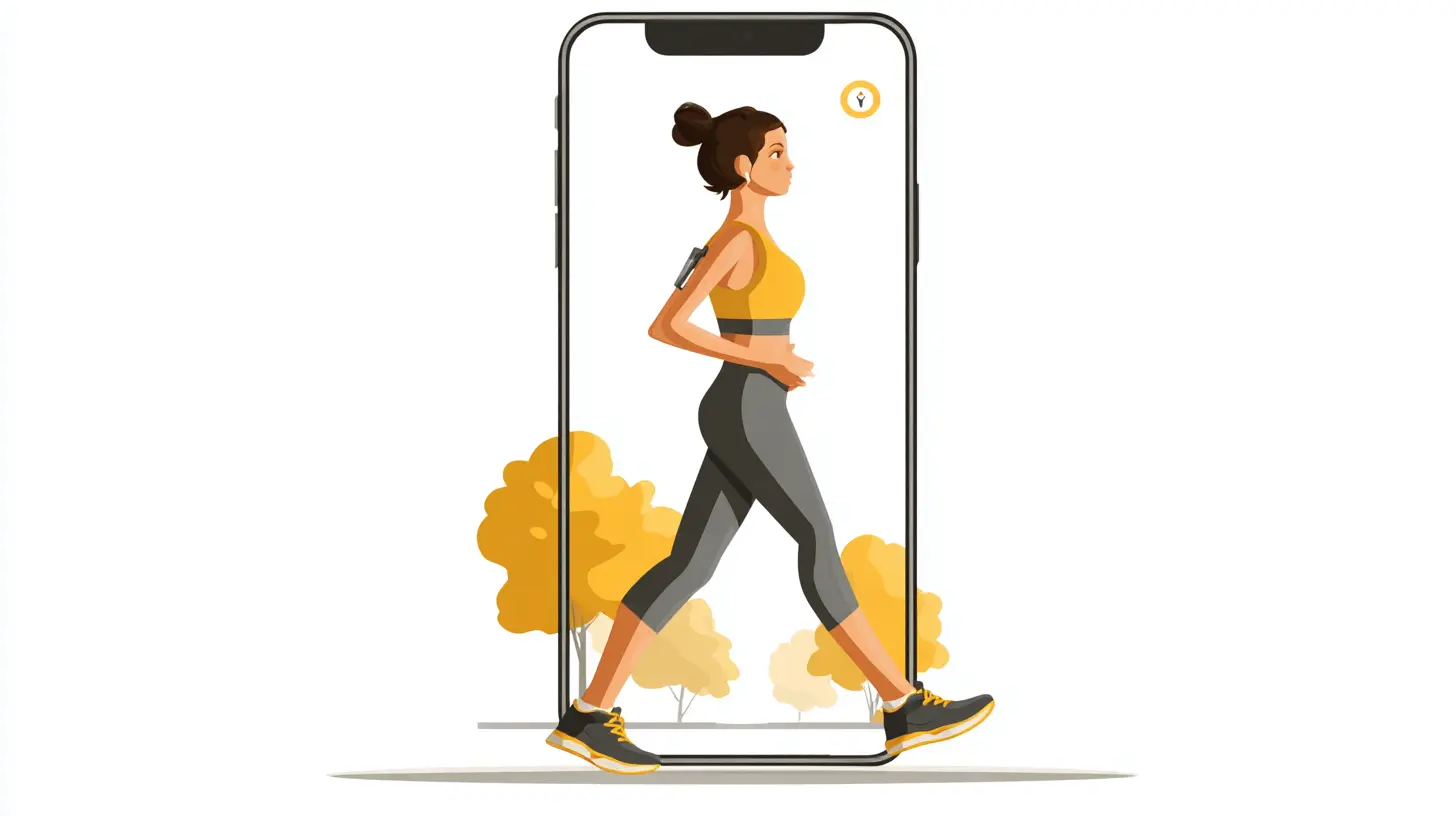
What "Turning Walking Into a Workout" Actually Means
Before comparing apps, you need a clear definition, because the category is fuzzy.A walking workout app is not a step counter with a leaderboard. It is software that imposes structure on walking: intervals, pace targets, incline or resistance changes, strength or mobility breaks, coaching cues, and progression over time. The structure is the product. The walking is just the delivery mechanism.
There are roughly four models in the market, and they behave very differently:
Audio-guided interval walking. A coach tells you when to walk briskly, when to recover, and how hard to push. Examples include interval walking programs built around the Norwegian 4x4 concept, where you alternate four minutes of hard effort with three minutes of easier effort. The app's value is pacing discipline. Most people walk too slowly during hard intervals and too fast during recovery, which flattens the training effect.
Walking plus strength or mobility blocks. These apps stop you mid-walk for bodyweight squats, lunges, push-ups against a bench, or balance work. The walk becomes a circuit station. This is the model that comes closest to the "full-body workout" claim in the title, and it is also the model with the most trade-offs, which I will cover later.
Treadmill incline and speed programs. Apps that pair with a treadmill and prescribe incline walking at specific speeds and grades. Incline walking at 10 to 15 percent grade is genuinely demanding for the glutes, calves, and heart, and it is far easier on the joints than running. This is arguably the most underrated format in the entire category.
Gamified and narrative walking. Apps that use stories, virtual races, or exploration themes to keep you moving. The training stimulus is real but incidental. These are adherence tools first and fitness tools second. That is not a criticism, since consistency is the hardest part of exercise, but you should know what you are buying.

Why Walking Responds to Structure So Well
Walking sits in a physiological sweet spot. It is low enough in impact that most people can do a lot of it, and variable enough that intensity can be manipulated through speed, incline, terrain, and load.When you walk briskly, you recruit the glutes, hamstrings, calves, and hip flexors in a coordinated pattern, and your core works continuously to manage rotation and posture. Add incline and the demand on the posterior chain climbs sharply. Add speed and your heart rate enters a zone that improves aerobic capacity without the recovery cost of running.
The catch is that walking is self-limiting in a specific way: most people unconsciously settle into a comfortable pace and stay there. A 45-minute walk at a casual pace is good for you, but after a few weeks your body adapts and the stimulus stops being enough to drive change. Apps solve this by forcing variability. Interval structures, incline changes, and strength breaks create the progressive overload that casual walking lacks.
This is the honest core of the category: apps do not make walking magical. They make walking progressive. That is a meaningful distinction, and it is the lens you should use when evaluating any specific product.

The Interval Walking Model: Simple, Effective, and Often Misapplied
High-intensity interval training adapted to walking is one of the most evidence-aligned formats in this space. The Norwegian 4x4 protocol, originally studied in running and cycling contexts, translates well to brisk walking on an incline: four minutes hard, three minutes easy, repeated four times, plus warm-up and cool-down.Why it works: the hard intervals push your heart rate high enough to improve stroke volume and aerobic capacity, while the recovery periods let you sustain quality across all four rounds. Walking makes this accessible to people who cannot tolerate running intervals, including many older adults and people with joint issues.
Where it goes wrong: pacing. Without a coach in your ear, it is easy to make the hard intervals too easy and the easy intervals too hard, which turns a polarized session into a moderately uncomfortable slog with less benefit. Good apps solve this with verbal cues, target effort descriptions, and sometimes heart rate guidance.
One practical caution: if you are new to intense exercise, have cardiovascular risk factors, or are returning after a long layoff, build a base of easy walking first. Intervals are potent but they are not a starting point. A few weeks of steady walking before adding intensity is the sensible sequence, and any app that pushes you straight into hard intervals on day one deserves skepticism.

Walking Plus Strength: The Real Full-Body Claim
This is where the title's promise lives or dies. Apps that interleave walking with bodyweight strength work do create a genuine full-body stimulus, but the design details determine whether it is a good workout or a gimmick.Consider a typical session: five minutes of brisk walking, then 12 squats and 10 incline push-ups, then five more minutes of walking, then reverse lunges and a plank, and so on for 30 to 40 minutes. What actually happens physiologically?
The walking keeps your heart rate elevated between strength sets, which adds a cardiovascular component. The strength blocks provide a resistance stimulus that pure walking cannot. The result is a hybrid session that improves muscular endurance, elevates heart rate, and burns more calories per minute than walking alone.
But here is the trade-off most app marketing ignores: hybrid sessions are mediocre at both jobs compared to dedicated training. The strength stimulus from bodyweight squats mid-walk is modest, well below what you would get from a focused resistance session with progressive loading. And the walking intervals are often too short to build deep aerobic base. Hybrid training is efficient, not optimal.
That is fine, as long as you choose it deliberately. If you have 30 minutes, three times a week, and no gym access, a well-designed walk-plus-strength app is an excellent use of that time. If your goal is visible muscle gain or serious strength, you will need dedicated resistance training alongside it, and the app should be treated as a supplement rather than the foundation.
Incline Treadmill Apps: The Underrated Option
If you have access to a treadmill, incline walking programs deserve serious attention. Walking at a steep incline forces the glutes and calves to work through a longer range under load, and it elevates heart rate dramatically without the impact forces of running.The practical advantage is control. Speed and grade are exact, so progression is measurable. You can add 1 percent grade per week and watch your capacity climb. Outdoors, terrain varies and weather interferes; on a treadmill with a structured app, the variables are locked down.
The disadvantage is boredom and the treadmill's tendency to shorten your stride if you let it. Apps help with the first problem through coaching and interval structure. The second is on you: stay upright, do not hold the rails, and resist the urge to lean forward.
For people with knee or hip concerns who still want a hard cardiovascular stimulus, incline walking is often the best available compromise. It delivers intensity with lower joint stress than running, and the strength demand on the posterior chain is real.
What These Apps Cannot Do
Honest evaluation requires naming the limits.They cannot fix your walking mechanics. If you overstride, collapse your arches, or swing your arms across your midline, an app will not necessarily catch it. Some include form cues, but none replace a physiotherapist's eye or a video review of your gait. If you have pain with walking, see a professional before downloading anything.
They cannot replace progressive resistance training for muscle and bone. Bodyweight breaks help, but building and maintaining muscle mass, especially after 40, requires load that increases over time. Walking-based apps are a complement to resistance training, not a substitute.
They cannot outrun your nutrition. Apps that display calorie estimates can create a false sense of precision. Wearable and app calorie estimates for walking are rough approximations at best. Do not build your eating around them.
They cannot manufacture motivation indefinitely. Novelty fades. The apps that work long-term are the ones whose structure you can sustain when the novelty is gone, which usually means simple formats with clear progression rather than elaborate gamification.
How to Evaluate an App Before You Commit
Most walking apps offer free trials or free tiers. Use them as auditions, and evaluate against these criteria:Does the progression make sense? Look for a plan that builds volume or intensity gradually over weeks. If every session is random, you are paying for entertainment, not training.
Are the coaching cues useful or noisy? Good audio coaching tells you when to push, when to back off, and how to hold your posture. Bad coaching talks constantly about nothing. Try a session with the screen off and see whether the audio alone carries you through.
Does it respect recovery? Hard interval days should be balanced with easy days. An app that pushes maximum effort every session is a red flag.
Can you adjust for your body? Knee issues, back issues, and cardiovascular conditions all change what is appropriate. Look for options to modify impact, incline, and intensity.
What does it do with your data? Health data is sensitive. Check whether the app sells or shares it and whether you can export or delete it. This is not paranoia; it is basic hygiene.
Is the free tier honest? Some apps lock the actual programming behind a paywall and give you a timer for free. Read the subscription terms before the trial converts.
Common Mistakes and Misconceptions
Mistake: Treating step count as training volume. Ten thousand steps of casual walking and a structured 30-minute interval session are not equivalent stimuli. Steps measure movement, not intensity. Use step goals for general activity and structured sessions for fitness.Mistake: Skipping the warm-up because "it is just walking." Interval walking and incline work load the calves and Achilles tendons significantly. Five minutes of easy walking and a few dynamic calf and hip mobility drills reduce injury risk meaningfully.
Mistake: Chasing sweat as proof of effort. A walk in cool weather may produce little sweat while still being a solid aerobic session. Effort perception and heart rate are better guides than how damp your shirt is.
Misconception: Walking workouts are only for beginners. Incline intervals and hybrid circuits are demanding enough for experienced exercisers, and many athletes use walking as low-impact conditioning between hard training days. The format scales.
Misconception: More is always better. Walking volume is generally well tolerated, but sudden jumps in duration or incline are a common cause of foot and Achilles irritation. Increase one variable at a time, by roughly 10 percent per week, and back off if you feel sharp pain rather than muscle fatigue.
Building a Weekly Plan Around a Walking App
A practical structure for most people, assuming no contraindications:- Two structured walking sessions per week, one interval-based and one incline-based, 30 to 40 minutes each.
- One hybrid walk-plus-strength session, 30 minutes, if your app supports it or you can pair a walking app with a bodyweight routine.
- Two dedicated resistance sessions, even short ones, to cover the strength gap that walking apps leave.
- Easy walking on remaining days, treated as recovery and general activity rather than training.
This gives you the cardiovascular and consistency benefits of walking apps while covering their main weakness, which is resistance training. If you only have time for two sessions total per week, make them the interval walk and a full-body resistance session, in that order of priority for most goals.
The Bottom Line
Walking apps that add structure, pacing, incline, and strength breaks can genuinely upgrade a habit you already have. They work because they apply progressive overload and variability to a movement pattern your body already knows. They fall short when they promise to replace dedicated strength training, when their programming is random rather than progressive, and when their calorie estimates are treated as gospel.Choose based on the format that matches your constraints: interval audio coaching if you walk outdoors, incline programs if you have a treadmill, hybrid circuits if your time is tight and your goal is general fitness. Try before you buy, judge the programming rather than the animations, and keep a resistance session or two in your week. Do that, and a walk stops being just a walk.
all images in this post were generated using AI tools
Category:
Fitness AppsAuthor:

Holly Ellison