Best Cooking Oils and Fats for a Low Sugar Meal Plan
22 September 2026
Let's get one thing straight right now: cutting sugar is not just about skipping dessert. It is about understanding how your entire plate works together, and that includes the fat you cook with. Most people obsess over carbs and ignore the oil sitting in their pan. That is a mistake. A big one.
Here is the truth nobody wants to tell you. Fat does not raise your blood sugar. It never has. But the type of fat you choose absolutely influences how your body handles the sugar and starch you do eat. It affects satiety, insulin sensitivity, inflammation, and even how quickly glucose hits your bloodstream. So if you are building a low sugar meal plan and still reaching for that dusty bottle of vegetable oil, we need to talk.
This article is not a listicle of "healthy oils" copied from ten other websites. It is a working guide. I will tell you what to use, when to use it, when to walk away, and why. Some of your favorite cooking fats are going to get criticized. Some underrated ones are going to get their moment. Let's go.
Why Fat Matters in a Low Sugar Meal Plan
When you reduce sugar, you usually reduce processed carbohydrates too. That means your body needs another fuel source to keep you full and steady. Fat becomes that fuel.Fat slows gastric emptying. Translation: food leaves your stomach more slowly, so glucose enters your bloodstream at a gentler pace. This is why a piece of toast with butter does not spike your blood sugar the way dry toast does. The fat blunts the curve.
Fat also supports hormone production, including hormones that regulate appetite. If you have ever eaten a low fat, high sugar breakfast and felt ravenous two hours later, you have experienced what happens when you remove fat and add sugar. Your body panics. It wants calories, fast.
But not all fats behave the same way. Some are stable under heat. Some oxidize and create harmful compounds. Some promote inflammation when eaten in excess. Some are perfectly fine in small amounts but terrible as your daily workhorse.
The goal is simple. Choose fats that are stable, minimally processed, and appropriate for the cooking method you are using. Then use them in amounts that support your meal plan without turning every dish into a calorie bomb.
The Core Criteria: How to Judge Any Cooking Fat
Before we name names, you need a framework. Otherwise you are just memorizing opinions.Smoke Point
Smoke point is the temperature at which a fat begins to break down and produce visible smoke. When that happens, the fat oxidizes. It creates free radicals and potentially harmful compounds. It also tastes terrible. If your oil is smoking, you have already ruined it.High smoke point fats work for searing, frying, and high heat roasting. Low smoke point fats belong in salads, drizzling, or gentle sauteing.
Oxidative Stability
Smoke point gets all the attention, but oxidative stability is the deeper issue. Stability depends on the fatty acid composition. Saturated fats are the most stable. Monounsaturated fats are fairly stable. Polyunsaturated fats are the least stable because they have multiple double bonds that are vulnerable to heat, light, and oxygen.This is why butter holds up better than flaxseed oil in a hot pan, even though people call flaxseed oil "healthy."
Processing Method
How a fat is extracted matters. Cold pressed and expeller pressed fats retain more natural compounds and have not been exposed to harsh chemical solvents. Refined oils are treated with heat, chemicals, or both. They are more neutral in flavor and more shelf stable, but they lose micronutrients and may carry trace residues.Neither category is automatically evil. But for a low sugar, whole food oriented meal plan, minimally processed fats usually make more sense.
Flavor and Function
Some fats taste like something. Olive oil, butter, ghee, coconut oil, tallow. Others are neutral. Refined avocado oil, refined coconut oil, light olive oil.Ask yourself what the dish needs. A neutral fat lets ingredients speak. A flavorful fat becomes part of the dish. Neither is better. It depends on context.
The Best Cooking Oils and Fats, Ranked by Use Case
Now the practical part. I am organizing these by how you will actually use them, not by some abstract health score.Extra Virgin Olive Oil
This is the gold standard for low to medium heat cooking and cold applications. It is rich in monounsaturated fat, specifically oleic acid, which is associated with cardiovascular benefits. It also contains polyphenols, natural antioxidants that support oxidative stability and may reduce inflammation.Use it for sauteing vegetables, roasting at moderate temperatures, drizzling over finished dishes, making dressings, and finishing soups.
Do not use it for deep frying or high heat searing. The smoke point of good extra virgin olive oil sits somewhere around 375 to 410 degrees Fahrenheit depending on quality and free fatty acid content. That is fine for most home cooking but not for a screaming hot cast iron sear.
One caveat. Quality varies wildly. Many bottles labeled extra virgin are not. Look for harvest dates, dark glass bottles, and reputable producers. If it tastes flat or greasy, it is probably old or cut with refined oil.
Avocado Oil
Avocado oil is the high heat champion among plant based fats. It is mostly monounsaturated, similar to olive oil, but with a much higher smoke point, often above 500 degrees Fahrenheit for refined versions. Cold pressed versions have a lower smoke point but still work well for medium high heat.Use refined avocado oil for searing, stir frying, grilling, and roasting at high temperatures. Use cold pressed avocado oil for dressings and lower heat cooking.
The downside is cost and, again, quality control. Some avocado oils are adulterated with cheaper oils. Look for brands that publish testing results.
Coconut Oil
Coconut oil is roughly 90 percent saturated fat. That makes it incredibly stable under heat. It resists oxidation better than almost any plant oil. It also has a distinct flavor and aroma, which is either a feature or a bug depending on the dish.Use it for high heat cooking, baking, and any dish where you want that coconut note. Virgin coconut oil tastes like coconut. Refined coconut oil is neutral.
Here is where I will push back on the hype. Coconut oil is not a magic health food. It raises LDL cholesterol in many people, sometimes significantly. Whether that matters for you depends on your genetics, your overall diet, and your lipid panel. If you have elevated LDL or a history of cardiovascular disease, use coconut oil sparingly and talk to your doctor. If your lipids are fine and you tolerate it, it is a solid cooking fat.
Butter
Butter is roughly 80 percent fat, with the rest being water and milk solids. Those milk solids are what burn. That is why clarified butter and ghee exist.Use regular butter for medium heat sauteing, baking, and finishing. The flavor is unmatched. It contains conjugated linoleic acid and fat soluble vitamins, especially if it comes from grass fed cows.
Do not use it for high heat searing unless you clarify it first. The milk solids will scorch before the fat is hot enough.
Ghee and Clarified Butter
Ghee is butter with the water and milk solids removed. What remains is nearly pure butterfat with a smoke point around 450 degrees Fahrenheit. It is stable, flavorful, and suitable for high heat. It is also lactose and casein free, which matters for people with dairy sensitivities.Use ghee for searing, roasting, frying, and sauteing. It is one of the most versatile fats in a low sugar kitchen.
The trade-off is cost and calorie density. Ghee is pure fat. A little goes a long way.
Tallow and Lard
Tallow is rendered beef fat. Lard is rendered pork fat. Both are high in saturated and monounsaturated fat, making them extremely stable for high heat cooking. They were kitchen staples for centuries before industrial seed oils took over.Use tallow for frying and roasting. Use lard for pastry, frying, and savory dishes. Leaf lard, which comes from around the kidneys, is the highest quality and has a neutral flavor.
Concerns about saturated fat apply here too. But if you are choosing between tallow and a highly refined seed oil for high heat frying, tallow is arguably the better choice from a stability standpoint. Context matters.
Duck Fat and Schmaltz
Duck fat and schmaltz, which is rendered chicken fat, are culinary treasures. They are high in monounsaturated fat, stable enough for roasting and pan frying, and they taste incredible. Duck fat potatoes are a cliche for a reason.Use them for roasting vegetables, pan frying proteins, and anything where you want rich flavor. They are not cheap, but they are worth it for special meals.
Seed Oils: The Complicated Middle
Canola, sunflower, safflower, soybean, corn, grapeseed, and rice bran oils are refined seed oils. They are high in polyunsaturated fat, especially omega 6 fatty acids. They are cheap, neutral, and have high smoke points.Here is the nuanced take. In a low sugar meal plan, these oils are not automatically forbidden. But they are not ideal as your primary cooking fat. Why?
First, they are highly processed. Second, they are fragile. Polyunsaturated fats oxidize easily, and while refining raises the smoke point, it does not make the fat immune to oxidation. Third, most people already consume far too many omega 6 fats relative to omega 3 fats, and seed oils contribute to that imbalance.
If you use them, use them sparingly and do not reuse them for frying. Do not let them sit in a hot car or on a sunny shelf. And do not fool yourself into thinking they are health foods just because they are liquid at room temperature.
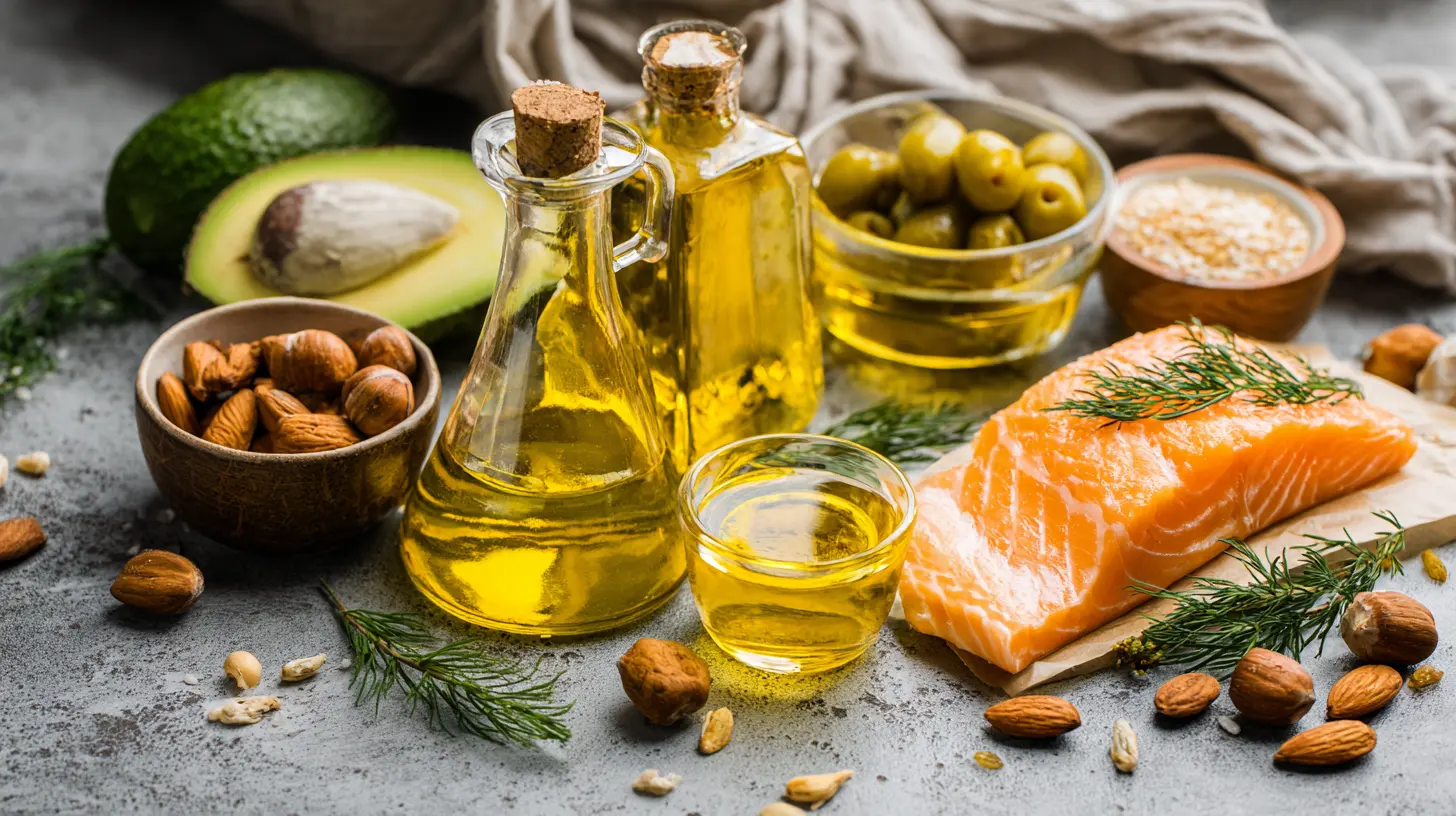
Fats to Avoid or Limit in a Low Sugar Plan
Some fats do not belong in your kitchen if you are serious about metabolic health.Margarine and Hydrogenated Oils
Partially hydrogenated oils are the source of artificial trans fats. They raise LDL, lower HDL, and promote inflammation. They have been largely removed from the food supply in many countries, but they still lurk in some processed foods and cheap spreads. Read labels. If you see "partially hydrogenated" anywhere, put it down.Highly Refined "Vegetable Oil" Blends
These are usually soybean oil based, heavily refined, and sold as all purpose cooking oil. They are cheap and neutral, but they are also the most processed fats in the grocery store. They are not poison in small amounts, but they should not be your daily driver.Reused Frying Oil
Any oil that has been heated repeatedly breaks down. It accumulates polar compounds, free radicals, and off flavors. If your oil is dark, sticky, or smells off, throw it out. This applies to every fat, including stable ones.How to Match Fat to Cooking Method
This is where most people go wrong. They pick one oil and use it for everything. That is like using a hammer for every job in the toolbox.Here is a simple decision framework.
For raw and cold applications like salads, dips, and finishing: extra virgin olive oil, cold pressed avocado oil, walnut oil, sesame oil for flavor.
For low to medium heat sauteing and gentle roasting: extra virgin olive oil, butter, coconut oil, duck fat, schmaltz.
For medium high heat searing and roasting: ghee, clarified butter, refined avocado oil, coconut oil, tallow, lard.
For deep frying: tallow, lard, refined coconut oil, refined avocado oil, peanut oil if you tolerate it.
For baking: butter, coconut oil, olive oil for savory baked goods, ghee.
Notice that I did not list extra virgin olive oil for deep frying. It is a waste of good oil, and it will break down. Notice I did not list butter for searing. It will burn. Match the fat to the job.
Common Mistakes and Misconceptions
Let's clear the air on a few things."All Saturated Fat Is Bad"
This is outdated. The relationship between saturated fat and heart disease is more nuanced than headlines suggest. Some saturated fats raise LDL, but they also raise HDL. The effect varies by individual. What matters more is the overall pattern of your diet. If you are eating whole foods, controlling sugar, and not overdoing calories, moderate saturated fat from butter, ghee, or coconut oil is unlikely to be your biggest problem."Seed Oils Are Fine Because They Lower LDL"
Lowering LDL is not the only marker of health. Seed oils are highly processed and high in omega 6 fats. They may lower LDL in some contexts, but they also promote oxidation and inflammation when consumed in excess. The honest answer is that we do not have definitive long term data, and anyone who tells you otherwise is selling something."You Should Never Heat Olive Oil"
Wrong. Extra virgin olive oil is stable enough for normal home cooking. The idea that it becomes toxic when heated is overstated. It does degrade faster than saturated fats, but at typical saute temperatures, it is fine."Coconut Oil Is a Superfood"
It is a stable cooking fat with some unique properties, but it is not a cure all. It is high in saturated fat and calories. Treat it like what it is: a useful tool, not a magic bullet."Fat Makes You Fat"
Dietary fat does not automatically become body fat. Excess calories do. Fat is calorie dense, so portions matter, but it also keeps you full. In a low sugar meal plan, fat is your ally, not your enemy.Practical Tips for Building Your Fat Pantry
You do not need twenty bottles. You need four or five that cover your bases.Start with extra virgin olive oil for everyday cooking and cold use. Add ghee or clarified butter for high heat. Add coconut oil if you like the flavor and tolerate it. Add one animal fat like tallow, lard, or duck fat for frying and roasting. Add a neutral high heat oil like refined avocado oil if you want something without flavor.
Store your fats properly. Heat, light, and oxygen are the enemies. Keep oils in dark bottles, in a cool cupboard, away from the stove. Buy smaller bottles if you do not use them quickly. Rancid oil is worse than no oil.
Taste your fats before using them. If they smell off, bitter, or like crayons, toss them. Your nose knows.
Do not reuse frying oil more than once or twice, and only if you strained it and stored it properly. Even then, use your judgment.
Bringing It All Together
A low sugar meal plan is not just about what you remove. It is about what you add. The right fats make your meals more satisfying, more stable, and more delicious. They help you absorb fat soluble vitamins. They support hormone health. They keep you from raiding the pantry at 9 p.m.Choose fats that are stable, minimally processed, and suited to your cooking method. Do not fear saturated fat, but do not worship it either. Do not write off all seed oils, but do not make them your default. Think in terms of context, quantity, and quality.
Your kitchen does not need to be complicated. A bottle of good olive oil, a jar of ghee, some coconut oil, and a tub of tallow or lard will cover almost everything you cook. Add butter for flavor and avocado oil for high heat neutrality, and you are set.
The rest is just cooking. And cooking, when you do it with intention, is one of the most powerful tools you have for controlling your blood sugar, your weight, and your long term health. So pick your fats wisely. Your body will notice.
all images in this post were generated using AI tools
Category:
Low Sugar DietAuthor:

Holly Ellison