A Guide to International Food Labels and Symbols
31 October 2026
Walk into a grocery store in Tokyo, a market in Marrakech, or a supermarket in Toronto and you will notice something immediately: the packaging speaks a visual language. Even before you read a word, symbols, seals, and color codes are already telling you what the product is, who certified it, and how it should be handled. For travelers, expats, importers, and anyone managing a restricted diet, that visual language matters more than most people realize. Misreading a single symbol can mean the difference between a safe meal and a medical emergency, or between a compliant shipment and a rejected container at customs.
This guide is not a list of logos to memorize. It is a framework for reading food labels across borders, understanding why certification systems differ so much, and knowing when a symbol is a genuine guarantee versus a marketing device. The goal is to help you make confident decisions in unfamiliar food environments.

Why International Food Labels Resist Easy Comparison
The first thing to understand is that food labeling is not governed by a single global authority. Codex Alimentarius, the food standards program run jointly by the Food and Agriculture Organization and the World Health Organization, provides voluntary international guidelines. Individual countries then build their own mandatory rules on top of, or sometimes in tension with, those guidelines. The result is a patchwork.Consider a simple example: allergen labeling. In the European Union, 14 major allergens must be emphasized in the ingredient list, typically in bold type. In the United States, major allergens are governed by a different list under the Food Allergen Labeling and Consumer Protection Act, and the law requires a "Contains" statement in specific cases. In Japan, allergen labeling is split into two tiers: mandatory for seven items and recommended for around twenty others. A product that is clearly labeled in one country may carry no allergen warning at all in another, not because the risk changed but because the regulation did not require it.
This is the core insight that most label guides miss: the absence of a warning is not evidence of safety. It usually reflects the regulatory culture of the country where the product was packaged. Understanding that distinction will serve you better than memorizing any single symbol.
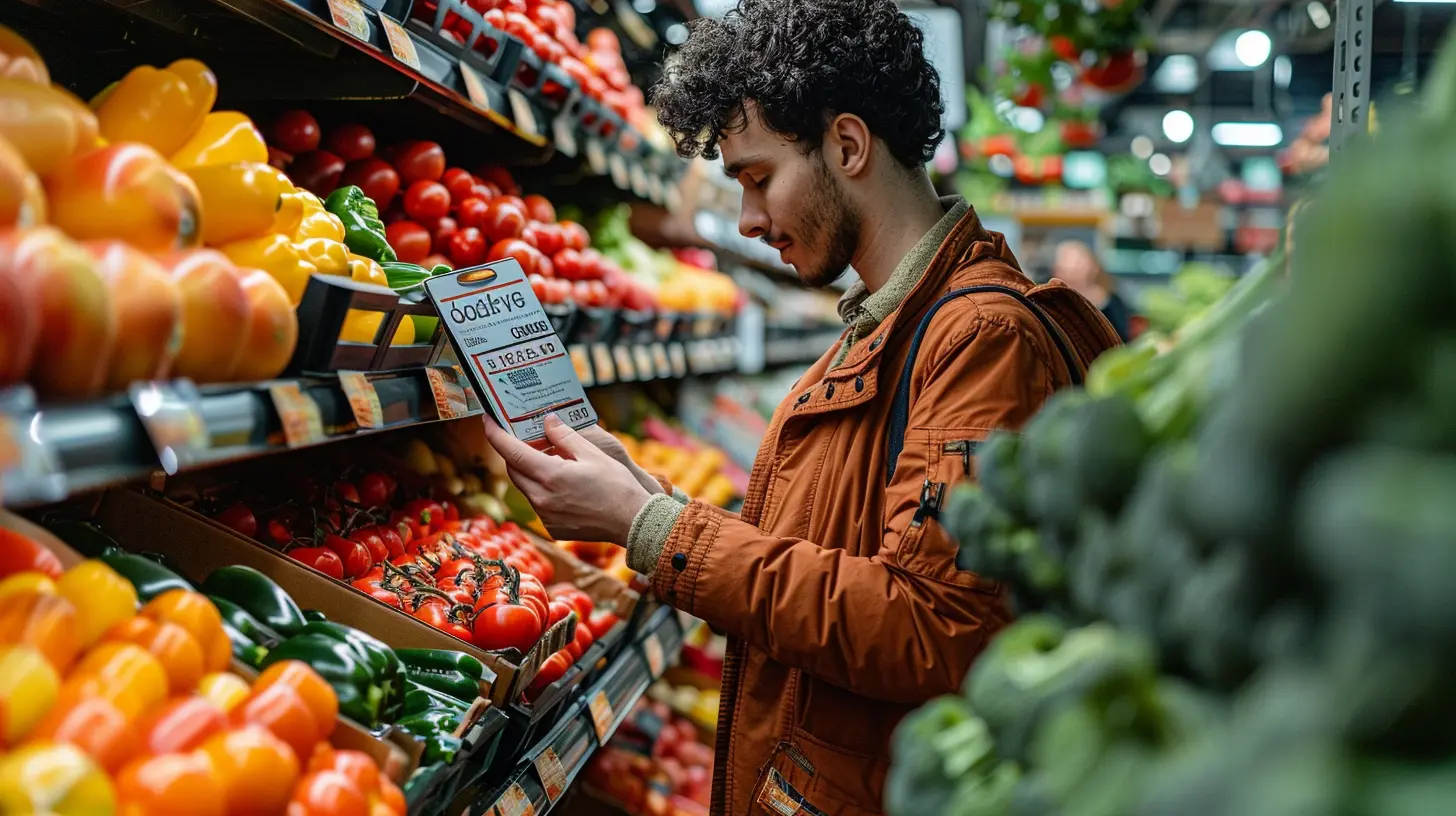
The Major Certification Symbols and What They Actually Guarantee
Organic Certification
Organic logos are among the most recognized and most misunderstood symbols in the world. The EU organic leaf, the USDA organic seal, and Japan's JAS organic mark all signal that a product meets a defined set of production standards. But the standards are not identical.The USDA seal, for instance, applies to products with at least 95 percent organic ingredients by weight, excluding water and salt. The EU regulation sets its own thresholds and rules for labeling products as "organic" versus "made with organic ingredients." A product certified in one system is not automatically recognized in another, which is why exporters often pursue multiple certifications, an expensive and time-consuming process.
Here is the practical takeaway: an organic seal tells you something meaningful about how the product was produced under a specific jurisdiction's rules. It does not tell you the product is healthier, and it does not guarantee the absence of pesticides, only adherence to the allowed substances under that standard. If organic status matters to you for ethical or environmental reasons, check which certifying body issued the seal and what its specific standards cover.
Fairtrade and Ethical Sourcing Marks
Fairtrade symbols, including the international Fairtrade Mark and various national variants, indicate that producers received a minimum price and a social premium. These marks are genuinely useful for consumers who want to support equitable supply chains. However, they certify the trading relationship, not the nutritional quality or environmental footprint of the product. A Fairtrade chocolate bar can still be high in sugar and saturated fat. Keep the claims separate in your mind.Religious and Dietary Certification
Halal and kosher symbols deserve particular attention because they are often the only way to verify compliance with religious dietary law. The challenge is that certification authority is decentralized. There is no single global halal logo. Certification bodies in Malaysia, Indonesia, the Gulf states, and Europe each operate their own systems, and not all are equally rigorous. Some countries, such as Indonesia and Malaysia, have government-linked certification regimes with detailed auditing. Elsewhere, a halal logo may come from a local mosque or a private certifier with limited oversight.For kosher, the situation is similar but with a longer established tradition of recognized certifying agencies. The symbols themselves often include a letter indicating the category, such as dairy, meat, or pareve. If religious compliance is essential to you, the identity of the certifying agency matters as much as the symbol itself. A useful habit is to note which agencies your community recognizes and to look for those specific marks rather than any generic logo.
Gluten-Free and Allergen Symbols
The crossed-grain symbol is widely used for gluten-free products, but the underlying standard varies. In the EU, "gluten-free" means no more than 20 parts per million of gluten. In the US, the FDA uses the same threshold. Australia and New Zealand apply a stricter standard for products labeled gluten-free. For most people with celiac disease, these differences are small, but they illustrate a broader principle: a symbol's meaning is defined by the regulation behind it.A common mistake is assuming that a product without a gluten-free symbol contains gluten. Many naturally gluten-free foods, such as plain rice or fresh vegetables, carry no symbol because they never needed certification. Conversely, a product with a "may contain" statement is signaling possible cross-contamination, which is a different risk category than containing the allergen as an ingredient.
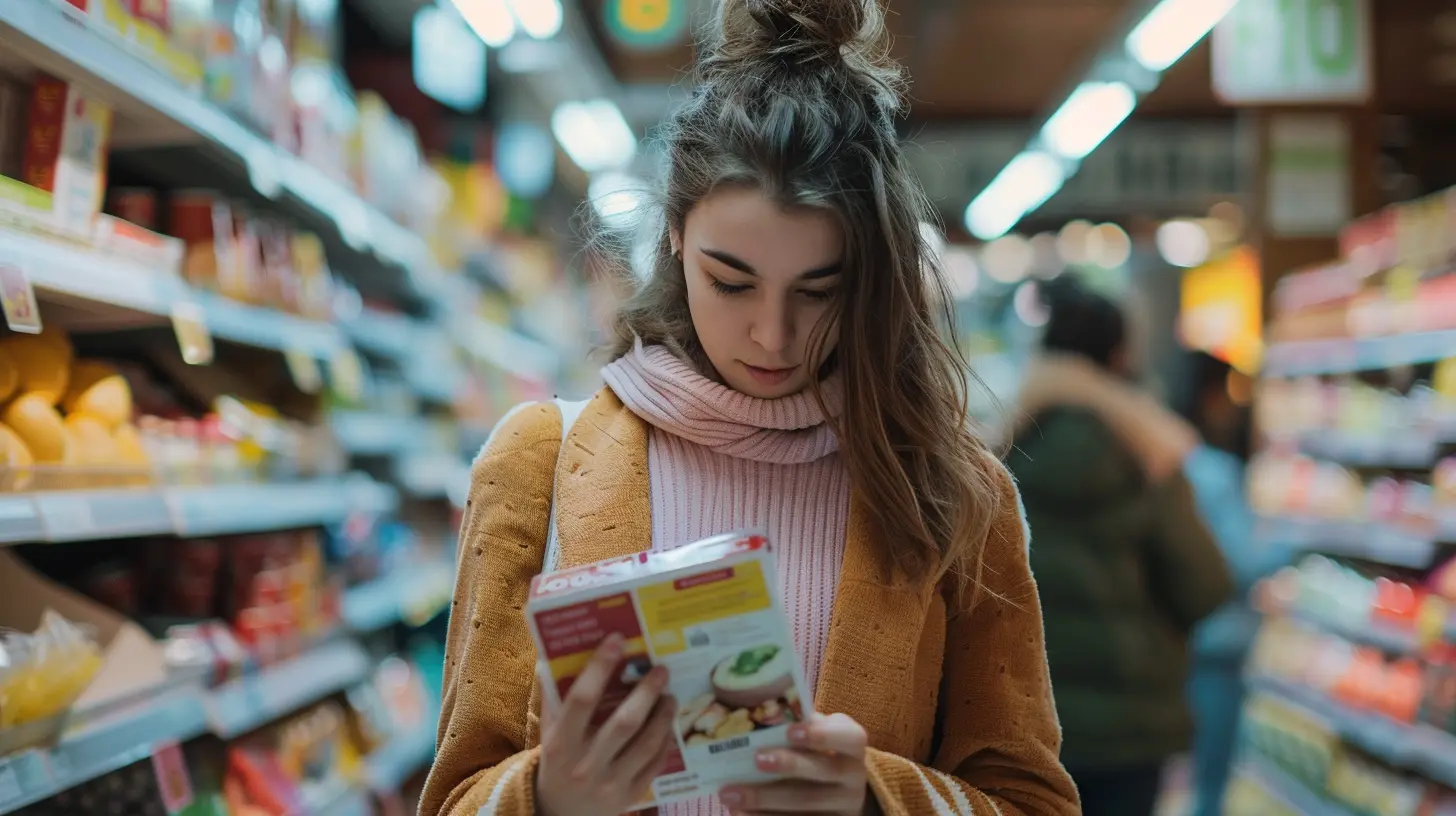
Nutrition Labels: Reading Beyond the Format
Nutrition panels are where international differences become most visible and most consequential.The Two Dominant Formats
The US Nutrition Facts panel and the EU nutrition declaration are the two formats you will encounter most often. The US panel leads with serving size and calories per serving, then lists macronutrients and key micronutrients as percent daily values based on a 2,000-calorie diet. The EU format typically presents values per 100 grams or 100 milliliters, which makes cross-product comparison far easier because it removes serving-size variation.This is a genuine trade-off. The US approach reflects how people actually eat, but serving sizes are set by regulation and may not match your portion. The EU approach is better for comparison shopping but requires mental math to translate into a realistic portion. When you are comparing two products in different formats, convert everything to per 100 grams before drawing conclusions. It is the single most useful habit for international label reading.
Front-of-Pack Labels
A growing number of countries require or encourage front-of-pack nutrition symbols. Chile's warning labels, black octagons reading "alto en" for high in sugar, sodium, calories, or saturated fat, are among the most direct. Mexico adopted a similar system. France developed the Nutri-Score, a color-coded letter grade, which several other European countries have adopted voluntarily.These systems are designed to simplify decisions, and they work reasonably well for processed foods. Their weakness is that they can penalize traditional foods unfairly or reward highly processed products that happen to score well on the algorithm. Nutri-Score, for example, has been criticized for giving favorable ratings to some artificially sweetened beverages. Use front-of-pack labels as a first filter, not a final verdict.
Ingredient Lists and Ordering Rules
Most jurisdictions require ingredients to be listed in descending order by weight. This is a powerful tool. If sugar appears among the first three ingredients, the product is sugar-heavy regardless of what the front of the package says. Watch for sugar under multiple names, such as syrups, concentrates, and fruit juice sweeteners, which can push total sugar higher without appearing as "sugar" near the top.Ingredient naming conventions also differ. What is called "corn syrup" in the US may appear as "glucose syrup" in the EU. "Canola oil" in North America is "rapeseed oil" in much of Europe. Knowing these equivalences prevents confusion and helps you spot ingredients you want to avoid.

Date Labels: A Persistent Source of Confusion
Date labeling is one of the least harmonized areas in international food regulation, and it causes enormous food waste.In the US, "best by" and "use by" dates are largely set by manufacturers and, with the exception of infant formula, are not federally mandated. In the EU, "use by" indicates a safety deadline, while "best before" indicates quality. In the UK, the Food Standards Agency draws a clear line: "use by" is about safety, "best before" is about quality.
The practical rule is straightforward. Treat "use by" dates as safety limits and respect them, especially for perishable foods. Treat "best before" dates as quality guidance and use your senses. A yogurt past its best-before date may be perfectly fine; a cooked chicken past its use-by date should be discarded. When you travel, learn which phrase in the local language means safety and which means quality. This single distinction prevents both illness and unnecessary waste.
Country-of-Origin and Traceability Symbols
Origin labeling rules vary widely. The EU requires origin labeling for certain products, such as honey, fresh fruit and vegetables, and fish. The US mandates country-of-origin labeling for some commodities but not others. The result is that a package may prominently display a flag or "Product of" statement that reflects only where the final processing occurred, not where the raw ingredients were grown.Protected designation systems are another category worth knowing. The EU's PDO, PGI, and TSG marks protect regional food names such as Parmigiano Reggiano or Champagne. These symbols are meaningful guarantees of geographic origin and traditional method. Outside the EU, similar systems exist, such as Japan's regional collective trademarks. If authenticity matters to you, these marks are more reliable than a brand name alone.
Common Mistakes and Misconceptions
Several recurring errors trip up even experienced label readers.The first is assuming global symbol recognition. A recycling symbol that looks familiar may carry different rules in different countries. The Mobius loop, for instance, indicates recyclability in some jurisdictions and recycled content in others.
The second is treating certification logos as uniform in rigor. Two products bearing the same type of logo may have been certified by bodies with very different auditing standards. When the stakes are high, such as with severe allergies or religious observance, verify the certifier.
The third is over-trusting health claims. Terms like "natural," "light," and "source of fiber" are regulated differently or not at all depending on the country. "Natural" in particular has no consistent legal definition in many jurisdictions and is often a marketing term rather than a guarantee.
The fourth is ignoring the language barrier in a literal sense. Machine translation of ingredient lists is improving but still fails on technical terms. If a product's ingredients are in a language you do not read and the stakes are high, use a translation tool cautiously and cross-check unfamiliar terms.
Practical Best Practices for Reading Foreign Labels
Build a small personal reference system. Photograph the symbols you encounter and note what they mean in context. Over time you will develop fluency.Prioritize the information that matters for your situation. If you have a food allergy, the allergen statement and the certifying body are your first stop. If you are managing sodium intake, the per-100-gram comparison is your best tool. If you are buying for religious reasons, the certifier's identity outweighs the logo's appearance.
When in doubt, contact the manufacturer. Most reputable companies respond to ingredient and certification inquiries, and a written answer is more reliable than inference from packaging.
Finally, accept that labels are a starting point, not a complete picture. They are shaped by regulation, commercial incentive, and local culture. Reading them well means reading them critically, asking what a symbol certifies, who issued it, and what it deliberately does not tell you.
Bringing It Together
International food labels reward a curious, skeptical reader. The symbols are not arbitrary, but they are not universal either. Each one reflects a regulatory decision made in a particular place for a particular reason. Once you understand that, you stop looking for a single global standard and start reading labels the way they were designed to be read: as local documents that require local context. That shift in perspective is what turns label reading from a guessing game into a genuine skill.
all images in this post were generated using AI tools
Category:
Food Label ReadingAuthor:

Holly Ellison